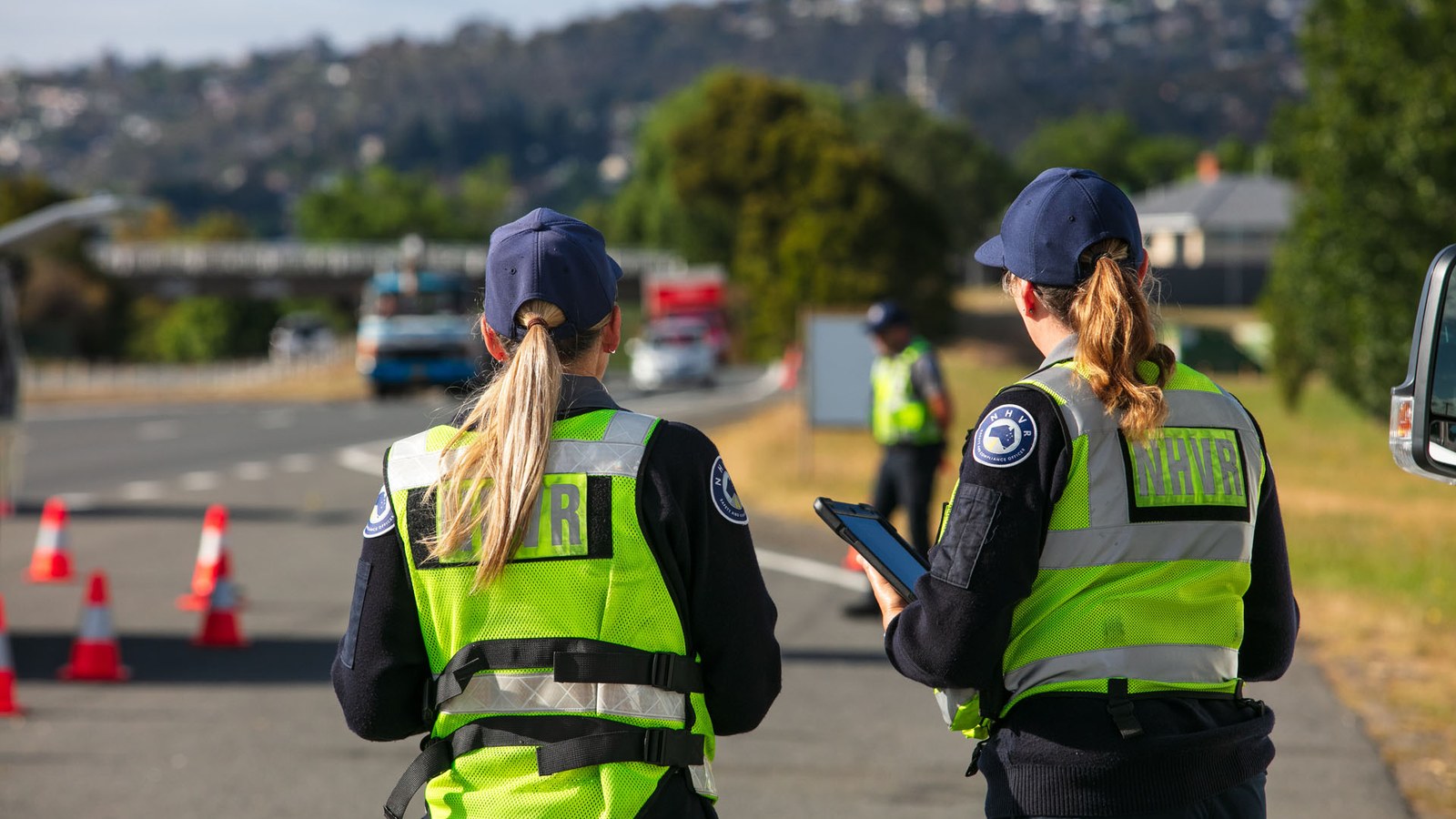
A former National Heavy Vehicle Regulator Director of Prosecutions has questioned whether some of the regulator’s strongest enforcement powers are being used too broadly — particularly where operators are prevented from operating while addressing wider safety-management concerns.
Belinda Hughes, now principal lawyer at Hughes Law, told WWTG she is seeing cases that raise questions about procedural fairness, proportionality and the level of engagement between investigators and operators.
Hughes was formerly NHVR Director of Prosecutions and relieved for about six months as acting executive director across investigations and prosecutions. Before that she was senior manager of prosecutions for Transport for NSW.
“A very, very strong power”
Hughes said a grounding or prohibition notice was “a very, very strong power” that she was seeing used “very, very broadly” rather than narrowly.
“There’s no procedural fairness occurring. So people aren’t being given an opportunity to provide submissions or material before such an order’s being made.”
Her comments follow the grounding of Hawkins Transport in Queensland, although Hughes said the concerns being brought to her extend beyond that individual matter. The NHVR maintains prohibition notices are safety powers available where an activity presents an immediate or imminent safety risk.
The SMS question
One of the most significant issues Hughes raised concerns Safety Management Systems.
The NHVR’s public guidance says an SMS is not mandatory under the HVNL generally. Operators seeking Heavy Vehicle Accreditation, however, must establish and implement an SMS complying with the relevant standard. Chain of Responsibility parties still have duties to manage the public risks created by their transport activities so far as is reasonably practicable.
Hughes said the distinction needs to be clear in enforcement practice.
“They’re saying it’s not mandatory. The policy is, and the media section is saying it’s not mandatory. It’s only mandatory for those in accreditation. Yet we are seeing, and I am seeing, companies grounded because they don’t have one.”
She said the August changes to the HVNL did not suddenly create a general requirement for every operator to have an SMS. The underlying obligation remains to manage risks, with an SMS being one structured way of doing that.
“If you’re going to start grounding companies because they don’t have one, you need to do a piece of education first.”
Could another enforcement tool achieve the safety outcome?
Hughes pointed to section 578 of the Heavy Vehicle National Law, which imposes a duty to minimise inconvenience or damage when powers are exercised. She said this makes consideration of available enforcement options important.
“Part of that is, we say, considering other available enforcement options before grounding them — for example, an improvement notice.”
She said an improvement notice can allow regulatory supervision while a company continues operating. That does not mean an improvement notice will always be appropriate: where an immediate or imminent safety risk requires an activity to stop, the HVNL provides prohibition powers for that purpose.
Compensation is possible in the law — but not automatic
Hughes also drew attention to section 581 of the HVNL, which provides for compensation in specified circumstances involving the exercise of authorised-officer powers.
“If you can establish that you incurred cost, damage or loss because of the exercise of a power of an authorised officer, and that power was improper or unreasonable, then you can claim for compensation.”
Asked whether the provision had been tested in comparable circumstances, Hughes said: “Not that I’m aware, but I can foresee it coming, Chris.”
The provision should not be read as an automatic entitlement to recover lost revenue whenever a prohibition notice is later withdrawn. Any claim would depend on the statutory requirements and the facts of the particular exercise of power.
What does a “modern regulator” look like?
Hughes was careful not to adopt WWTG’s suggestion that the regulator might be “making things up as they go”.
“Look, I wouldn’t say that.”
Instead, she gave an example of an investigator contacting her about another client, discussing notices that were expected and requesting additional material. She held that out as a better model of regulatory engagement.
“Isn’t that a better way for a regulator to be working, where anybody says, ‘I’m going to ground you. Here is why, here are the reasons. Here’s a draft order even. Now I’m inviting you to tell me why not, but I’m also asking: is there anything that you can do to fix this, so I don’t have to ground you?’”
Hughes said she would be surprised if an operator confronted with that choice did not immediately ask how it could work with the regulator to fix the problem.
“And that is all without actual exercise of a power. And that to me is a modern regulator. It’s engaging.”
She said engagement should also continue after a prohibition is imposed, so that completed requirements can be recognised and operators understand what remains necessary to have restrictions lifted.
Hughes said that, based on the matters reaching her, she had seen a lack of engagement in some cases. But she also expressly acknowledged the more recent contact from an investigator and added: “Perhaps they’re changing.”
More operators are calling
Hughes said she was receiving “a lot of calls” from people concerned about what they perceive as a more aggressive approach to accreditation and enforcement. That is Hughes’ account of the matters reaching her practice; it is not, by itself, evidence of the regulator’s overall enforcement pattern.
She also questioned whether removing large numbers of operators from accreditation could have an unintended consequence for regulatory visibility.
“Accreditation previously was sort of used as keeping an eye on industry. So you give them accreditation and the benefit is you get the data, you get the information, you get the oversight of the operations.”
Her concern is that if fewer operators participate in accreditation, the regulator may have less routine visibility over those businesses.
NHVR: prohibition notices are rare and risk-based
In a detailed response to WWTG, the NHVR said its comments were general and were not in reference to any particular prohibition notice.
An NHVR spokesperson said the regulator’s approach is to work with operators to identify and address safety risks before stronger intervention is required, including engagement, education and lower-level regulatory action.
“A prohibition notice is not issued simply because an operator has made an isolated mistake or fallen short of a requirement.”
The regulator said prohibition notices are reserved for circumstances where there is an immediate or imminent risk of death or serious harm and intervention is necessary to address that risk. It described the notices as remedial rather than punitive.
The NHVR said prohibition notices are among its strongest regulatory actions and are “exceptionally rare”, with fewer than 0.01 per cent of Australia’s almost 300,000 heavy-vehicle operators subject to one in a year.
It said other responses can include education and engagement, improvement notices and requirements to present vehicles for inspection, but stronger intervention may be necessary where serious safety issues remain unaddressed and the evidence indicates an immediate or imminent risk of death or serious harm.
NHVR answers the SMS and section 578 questions
On Safety Management Systems, the NHVR told WWTG its focus is “on the underlying safety risk and how that risk is being managed”. It said safety management is relevant to understanding how an operator manages operational risks and meets its safety obligations.
On section 578, the regulator acknowledged the HVNL requires an authorised officer exercising a power to use reasonable diligence to cause as little inconvenience and do as little damage as possible. It said its authorised officers exercise their powers in accordance with the HVNL, including that obligation.
The regulator also said its broader approach is becoming increasingly targeted: greater education, engagement and practical assistance for operators doing the right thing, while taking regulatory action where operators repeatedly fail to meet safety obligations, fail to address identified risks and pose serious risks to other road users.
That response puts a clear regulator position against Hughes’ concerns. The point of contention is not whether prohibition powers exist, but how the threshold, proportionality, engagement and available alternatives are applied in individual cases.
Hawkins shows both sides of the argument
The Hawkins Transport case provides a useful example because the regulator and operator ultimately did engage.
The NHVR told WWTG it lifted the prohibition notices after an agreed pathway was established to address identified safety and compliance concerns. The regulator said it considered the safety risks, Hawkins’ remediation work and the importance of reliable freight to affected communities.
Hughes’ argument is not that regulators should stop enforcing the law. It is that, where the circumstances permit, engagement before and during severe enforcement action may allow safety risks to be addressed without unnecessarily extending a shutdown.
A bigger question for the new HVNL era
Operators need to understand what the law actually requires. The regulator needs sufficient power to intervene where a genuine safety risk exists. And where an intervention can shut down an entire transport operation, the distinction between what is legally required, what is regulatory best practice and what is necessary to remove an immediate safety risk needs to be exceptionally clear.
Primary sources
- Hughes Law — Belinda Hughes, principal lawyer (interview and review)
- National Heavy Vehicle Regulator — response to WWTG and prohibition notice guidance
- National Heavy Vehicle Regulator — Safety Management System FAQs
- National Heavy Vehicle Regulator — Safety Management Systems guidance
- Heavy Vehicle National Law (Queensland) — sections 578 and 581