At BP Heathwood, space is at a premium.
Trucks arrive and leave as drivers search for fuel, food, a shower, a parking space and a few hours’ rest before the next leg. For a driver, that is not an abstract policy question. It is part of the job.
While waiting for Nicole Rosie and Rod Hannifey to arrive, I spoke with several truckies. Most were happy to have a say. A few deliberately stayed clear of the media.
Then there was Phil.
Once he understood who I was there to meet, he was keen to explain what he believes is wrong with the industry from a driver’s point of view. The details varied, but the feeling underneath was familiar: decisions are made about drivers more often than they are made with them.
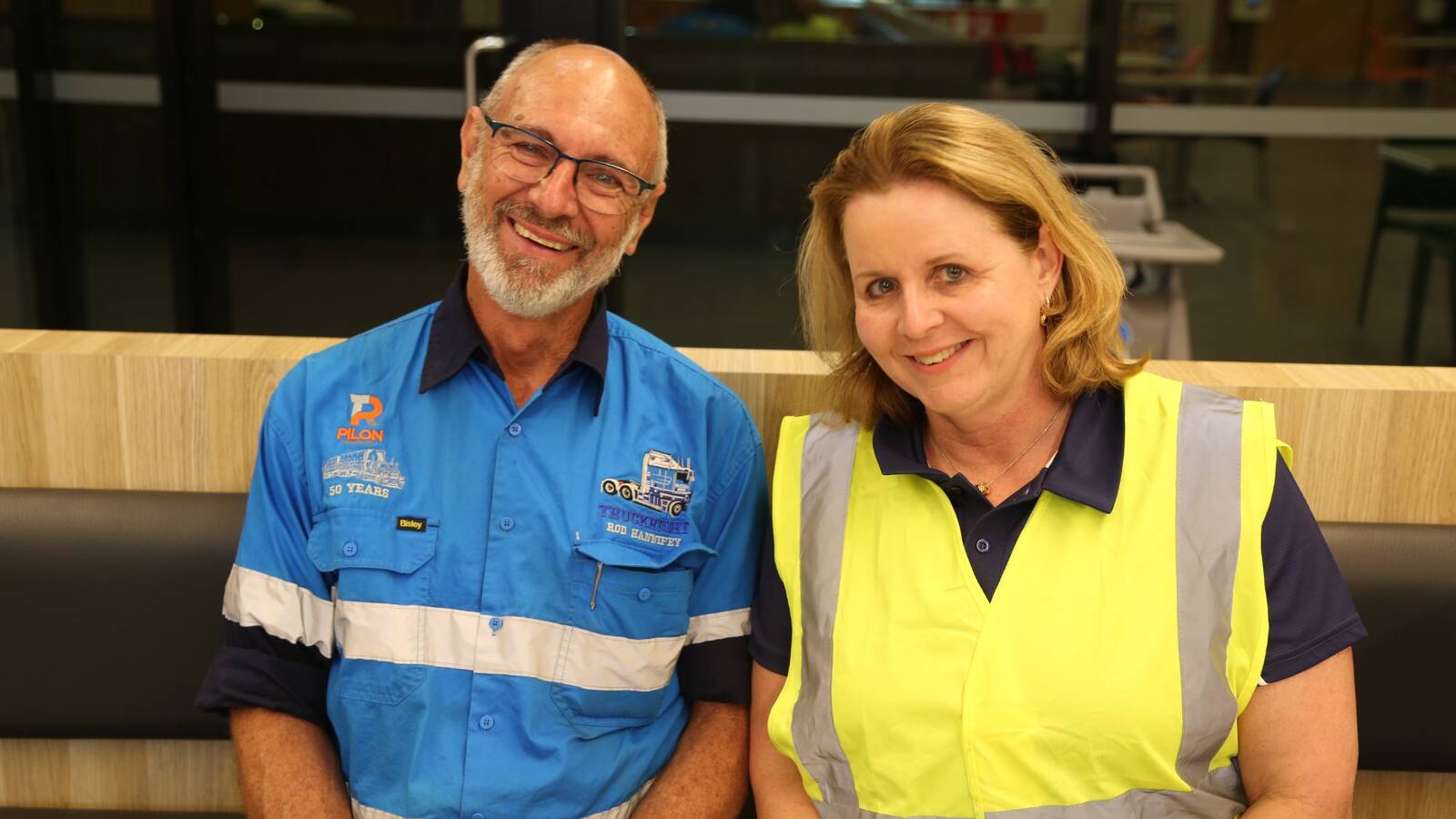
That was the atmosphere when Rosie and Hannifey arrived at Heathwood after dark.
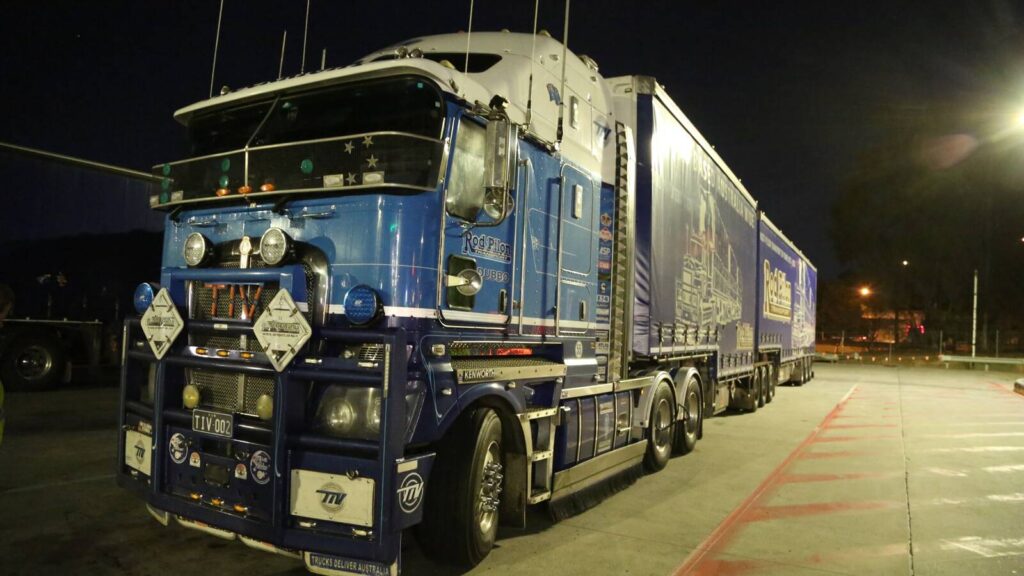
Rosie, the chief executive of the National Heavy Vehicle Regulator, had spent the day in the passenger seat of Hannifey’s Rod Pilon Transport B-double, travelling from Dubbo to Brisbane. She had just completed a full working shift in a truck.
That decision is the real significance of the journey.
Earlier that morning, before the truck left Dubbo, Hannifey had given Rosie an extensive list of more than 35 issues affecting drivers. Rest areas. Road conditions. Health. Education. Access. Maintenance. Enforcement. Driver representation. The way trucking is discussed publicly.
Over the next 10 hours, they talked through them in the cab.
“It’s one thing to talk to people about it. It’s another thing to write them an email and say, ‘Are you aware of this?’” Hannifey said.
“It’s a completely different thing to have them come and make time available to spend the day in the truck.”
Hannifey has spent years advocating for drivers, road safety and better understanding between the industry and the people regulating it. His list was not one simple problem with one simple solution.
Some issues sit with the NHVR. Others sit with road managers, state governments or the National Transport Commission.
That division of responsibility was one of the clearest messages from the day.
Rosie said the NHVR is often viewed by drivers as the body in charge of everything: road condition, access, enforcement and the rules themselves. In reality, the regulator often sits between industry and a range of other decision-makers.
“The rules, they’re set by NTC, not us. We’re just implementing them,” she said.
Road funding and projects are principally state responsibilities. Access decisions are also made by states and road managers. The NHVR’s role is to use what it sees and hears on the road to influence the bodies that hold those levers.
A full shift, not a briefing
Rosie said much of what she saw on the run was familiar from her previous work leading New Zealand’s transport agency and large operational businesses. She understands the scale of the road task: historical underinvestment, heavier vehicles and state networks struggling to keep up with wear.
But that did not make the day a formality.
Her strongest observation was not one pothole or one rough stretch of road. It was how long-haul drivers live in their trucks.
“The only thing really is just the fact people are living in their cabs much more in Australia than, say, New Zealand,” Rosie said.
“It really hit home how this is actually a real lifestyle decision for drivers in Australia.”
That matters because fatigue, health, safe parking, toilet facilities and the basic quality of a rest stop are not side issues. They shape whether a driver can do the job safely and whether the industry can keep experienced people or attract new ones.
Hannifey also showed Rosie the practical effect poor roads can have on a truck and its driver. Repeated heavy impacts can place pressure on components, affect a driver’s body and create faults that may not emerge until well after a truck has passed the original bad patch.
Rosie’s answer was measured.
She said regulators need to be sensible and proportionate when road condition is contributing to vehicle wear. But she also said operators working in higher-risk conditions need maintenance systems that reflect that exposure.
That is a fair but difficult balance. A driver should not be expected to accept defective infrastructure as normal. Nor can a truck be allowed to become unsafe because the road has been rough.
Build rest areas with drivers, not around them
The conversation moved beyond whether there are enough rest areas to whether the people using them are involved early enough in their design.
Rosie said the planning, investment, design and delivery of a rest area can involve separate teams and decisions made years before a project reaches construction. By the time a driver spots a problem, the person on site may have a fixed budget, a tight deadline and little ability to change it.
Her view was that drivers need to be connected with planners and designers while standard designs are still being shaped.
The NHVR cannot build the facility. But Rosie said it can help connect the right people and make sure the driver experience is part of the conversation before a poor design becomes an expensive finished project.
That matters at places such as Heathwood. Space, access and the practical ability to park a heavy vehicle can determine whether a rest stop actually works when it is needed.
The missing voice
The most important part of the conversation came back to Phil’s point at Heathwood: who gets heard?
Hannifey argued that associations and unions have an important role, but long-haul drivers can still fall through the gaps. Industry associations often represent operators. Drivers working long hours on the road are less likely to attend forums, sit on committees or make formal submissions.
Rosie agreed.
“Often in all of that, a driver’s voice or perspective could be lost,” she said.
Hannifey proposed a driver consultation forum. Rosie said she had run driver forums in previous roles and would consider how to bring more drivers into NHVR engagement. She also said the issue needed to be raised with the NTC, where many of the rules affecting drivers are developed.
“I’ll go back and talk to NTC about it,” Rosie said. “I think it’s a very good point. We need to continue to work on it.”
The most concrete commitment from the day was about the NHVR itself.
Rosie said the ride should not be a one-off exercise confined to the chief executive. She has told her team that staff should look at doing a full shift, or an overnight run, with a driver.
Her reason was simple: there is often a gap between “work as imagined” in an office and “work as done” on the road.
For Rosie, the frontline is where the regulator can see whether its systems are helping drivers do the job safely or making it harder.
That is why her decision to spend the day in the truck matters. The ride gave her a view of the industry that cannot be replicated in a briefing paper, a consultation meeting or a formal submission.
What happens next
There was also discussion about young drivers learning how to share the road with heavy vehicles. Hannifey’s view is that many dangerous situations begin with a lack of understanding: blind spots, braking distance, merging, overtaking and the space a B-double needs to operate safely.
Rosie said the learner and provisional licence stages were an important point to build that awareness. Licensing remains a state responsibility, but she said the NHVR would continue to influence the conversation.
Rosie also said the NHVR had increased its education activity by 30 per cent over the past year, while regulatory enforcement and prosecutions had remained broadly unchanged.
She accepted that many drivers perceive enforcement as increasing and said the regulator needs to explain its figures more clearly. Rosie also agreed there was room to tell more positive stories about operators and drivers doing the right thing.
Rosie did not promise to fix all 35-plus items on Hannifey’s list. Nor did she promise a regular six-month review.
She did say she would take the list back, that some issues were already being worked on, and that she would loop back to Hannifey when action was taken.
That is the next test.
The ride from Dubbo to Brisbane will not solve the industry’s problems. It will not create parking at Heathwood, repair a bad road, rewrite the law or give every driver a seat at the policy table.
But it did something useful.
It put the chief executive of the NHVR in the cab for a full shift. It gave Hannifey the chance to explain his list in the environment where those issues are felt. And, at the end of the day, it brought the conversation back to the people waiting for a place to park, a meal, a rest and a fair hearing.
Sources: WWTG interview with Nicole Rosie and Rod Hannifey, recorded at BP Heathwood on 24 September 2026; original audio recording; NHVR and National Transport Commission material.