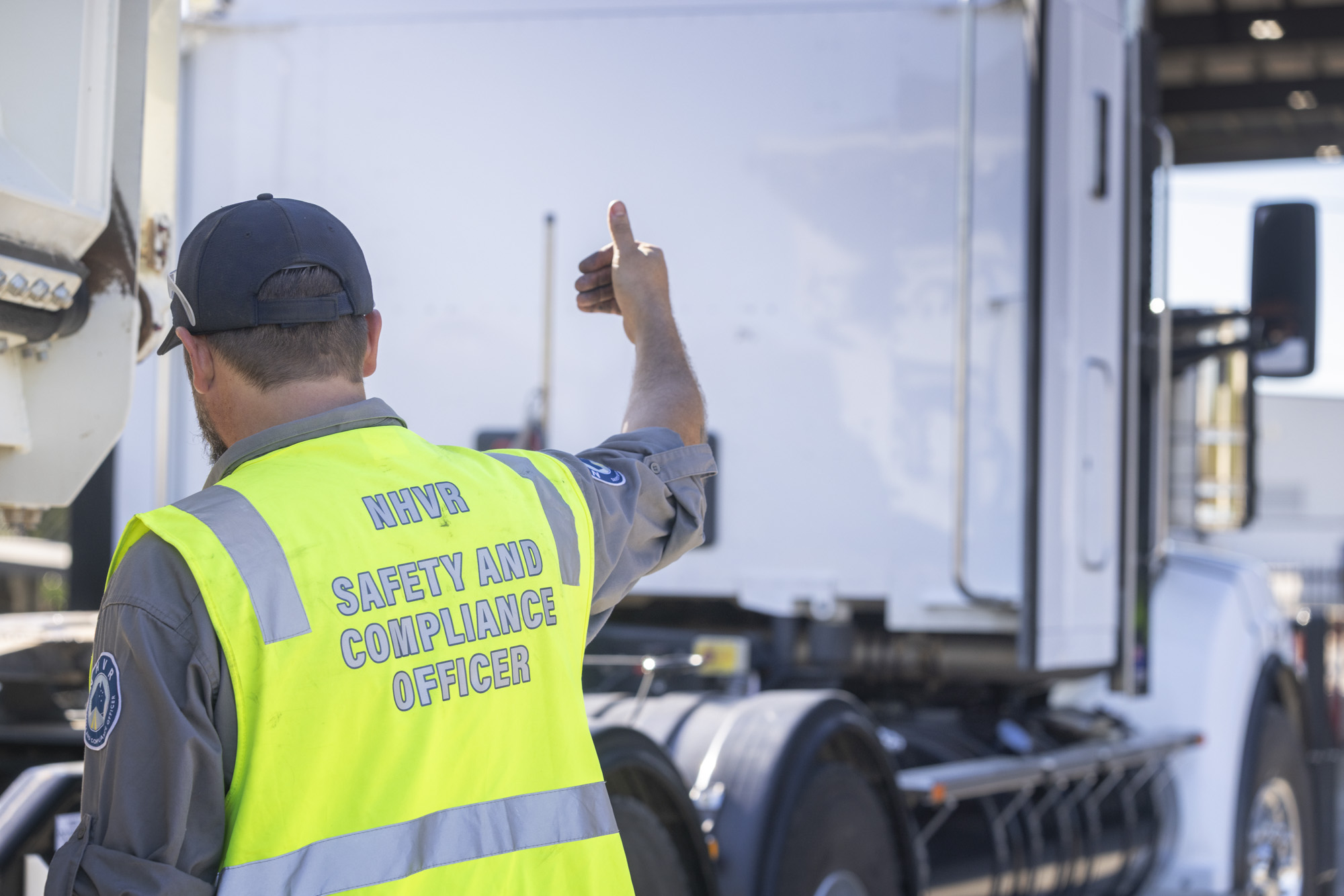
Hawkins Transport is back on the road.
That ends the immediate shutdown for the remote Queensland operator and restores its ability to service customers.
It does not resolve the central regulatory question raised by the case.
What changed?
The National Heavy Vehicle Regulator (NHVR) says prohibition notices issued to Hawkins Transport were imposed in response to identified safety issues. The notices were later lifted after the company engaged with the regulator and agreed to a pathway addressing its safety and compliance concerns.
NHVR Executive Director Statutory Compliance Paul Alsbury told WWTG the regulator had considered “both the safety risks identified, Hawkins’ ongoing work to remediate, and the importance of reliable freight services to the communities affected”.
The legal proceedings brought by Hawkins Transport have now been discontinued.
Timeline: how the Hawkins prohibition unfolded
Before 14 August — inspections and compliance concerns: Public reporting says the dispute followed missed mandatory inspections and wider safety and compliance concerns. Hawkins attributed the missed inspections to staffing changes, literacy and reporting misunderstandings. The NHVR has said the prohibition notices were issued in response to identified safety issues.
14 August — fleet-wide prohibition: Hawkins Transport and Bradley Hawkins were issued prohibition notices that stopped the company’s transport activities. Big Rigs reported the fleet-wide grounding from this date. Hawkins said the shutdown threatened jobs and essential freight services across the Gulf.
By 21 August — review and stay applications underway: Big Rigs reported that Hawkins’ lawyer was seeking an internal review of the prohibition notices, had filed an urgent Supreme Court application for a stay listed for 27 August, and had also filed a stay application with the Queensland Civil and Administrative Tribunal. A stay, if granted, could have allowed operations to resume while the review was determined.
26 August — still grounded, Supreme Court contest due next day: ABC reported that Hawkins Transport remained prohibited from operating and was due in Brisbane’s Supreme Court on 27 August seeking a stay. The company was also working through fleet inspection requirements.
Overnight 26–27 August — NHVR lifts the prohibition: Before the scheduled Supreme Court contest, the NHVR lifted the prohibition notices with immediate effect after Hawkins Transport agreed to a pathway to address identified safety and compliance concerns. The regulator said it had considered the identified safety risks, Hawkins’ ongoing remediation and the importance of reliable freight services to affected communities.
27 August — legal proceedings discontinued: With the prohibition lifted by the regulator, Hawkins Transport discontinued its legal proceedings. The return to operation was therefore not the result of a court order overturning or staying the prohibition.
28 August — Hawkins describes the remediation pathway to WWTG: In a recorded interview, Bradley Hawkins told WWTG he understood the agreed pathway would require more than 300 items of equipment to be presented over eight weeks, with more than 50 already put through the process. Those figures are Hawkins’ account and were not confirmed by the NHVR in its response to WWTG.
Bradley Hawkins says the business is more than one freight task
In a recorded interview with WWTG after the prohibition was lifted, Bradley Hawkins described an operation carrying livestock, groceries and general freight into remote communities.
“I’m a livestock carter, a grocery carter … predominantly groceries,” Hawkins said.
His argument was not that remote location should remove the obligation to run safe vehicles. The practical issue he repeatedly returned to was how inspections, rectification and regulatory requirements work when the fleet is based in Normanton and inspection capacity is hundreds of kilometres away.
That geographic problem matters because regulatory action against a large remote operator can have consequences beyond the company itself.
But geography does not alter the underlying safety obligation.
What Hawkins says the pathway now requires
Hawkins told WWTG he understood the agreed pathway would require him to present more than 300 items of equipment over an eight-week period. At the time of the interview, he said more than 50 items had already been put through the process.
“I’ll do whatever they ask,” Hawkins said.
He said the process had also included management, Chain of Responsibility, maintenance and pre-start courses.
“I’ve done everything they’ve asked me to do,” he said.
Those details are Hawkins’ account of the pathway. The NHVR did not confirm the eight-week timetable, equipment count or course details in its response to WWTG.
What a prohibition means
The NHVR’s own guidance says prohibition notices are used to stop activity constituting an immediate or imminent safety risk.
The same guidance says a prohibition ceases when the regulator is satisfied that adequate action has been taken to remove that immediate or imminent risk.
That makes the threshold for lifting the notice a legitimate public-interest question.
WWTG asked the NHVR what action or new information satisfied it that the risk underpinning the Hawkins prohibition had been adequately addressed.
We also asked what conditions apply under the agreed pathway and what happens while the remaining safety and compliance work continues.
The regulator provided an attributable statement but did not disclose those details.
NHVR has explained the threshold in a previous case
There is a useful comparison in the regulator’s own public record.
When the NHVR lifted a prohibition against Auswide Linehaul Services in 2020, it publicly listed the corrective actions that had been taken. Those included third-party driver training, new fatigue and fitness-for-duty controls, inspection of 65 prime movers and trailers, external safety advice and real-time fatigue monitoring.
In that case, the regulator explicitly connected those corrective actions to its conclusion that the immediate or imminent serious risk no longer existed.
The Hawkins statement is different.
It says the company has engaged with the regulator and agreed to a pathway. It says ongoing remediation and community freight needs were considered. It says the regulator will continue to closely oversee the operator.
It does not spell out the actions or evidence that moved Hawkins from prohibition to permitted operation.
That does not mean the decision was wrong. It means an important part of the regulatory reasoning remains undisclosed.
Freight continuity entered the regulator’s calculation
The NHVR’s statement also confirms something significant for the separate freight-resilience question.
Alsbury said the regulator considered the importance of reliable freight services to the affected communities and described the outcome as reflecting a “risk-based and proportionate approach to regulation”.
He said that approach involved taking firm action where safety risks are identified while working with operators willing to address concerns to achieve compliance and keep safe, essential freight moving.
Safety obligations cannot simply be waived because groceries or other essential goods need to move.
But neither does the freight requirement disappear when a regulator stops a major operator.
That is why WWTG has separately asked Queensland government agencies, local councils and resilience bodies who is responsible for maintaining essential freight continuity when a major commercial transport provider suddenly becomes unavailable.
The immediate shutdown is over. The precedent still matters
Hawkins Transport is operating again and the regulator says it will continue closely overseeing the operator as the agreed work progresses.
For Hawkins, that is the practical outcome that matters today.
For the wider industry, the case raises a different question.
If a prohibition is imposed because activity presents an immediate or imminent safety risk, operators have a legitimate interest in understanding the evidence and remedial threshold that can move a business from prohibition back to operation under continuing regulator oversight.
In at least one previous case, the NHVR publicly explained that transition in detail.
In Hawkins, it has not yet done so.