-
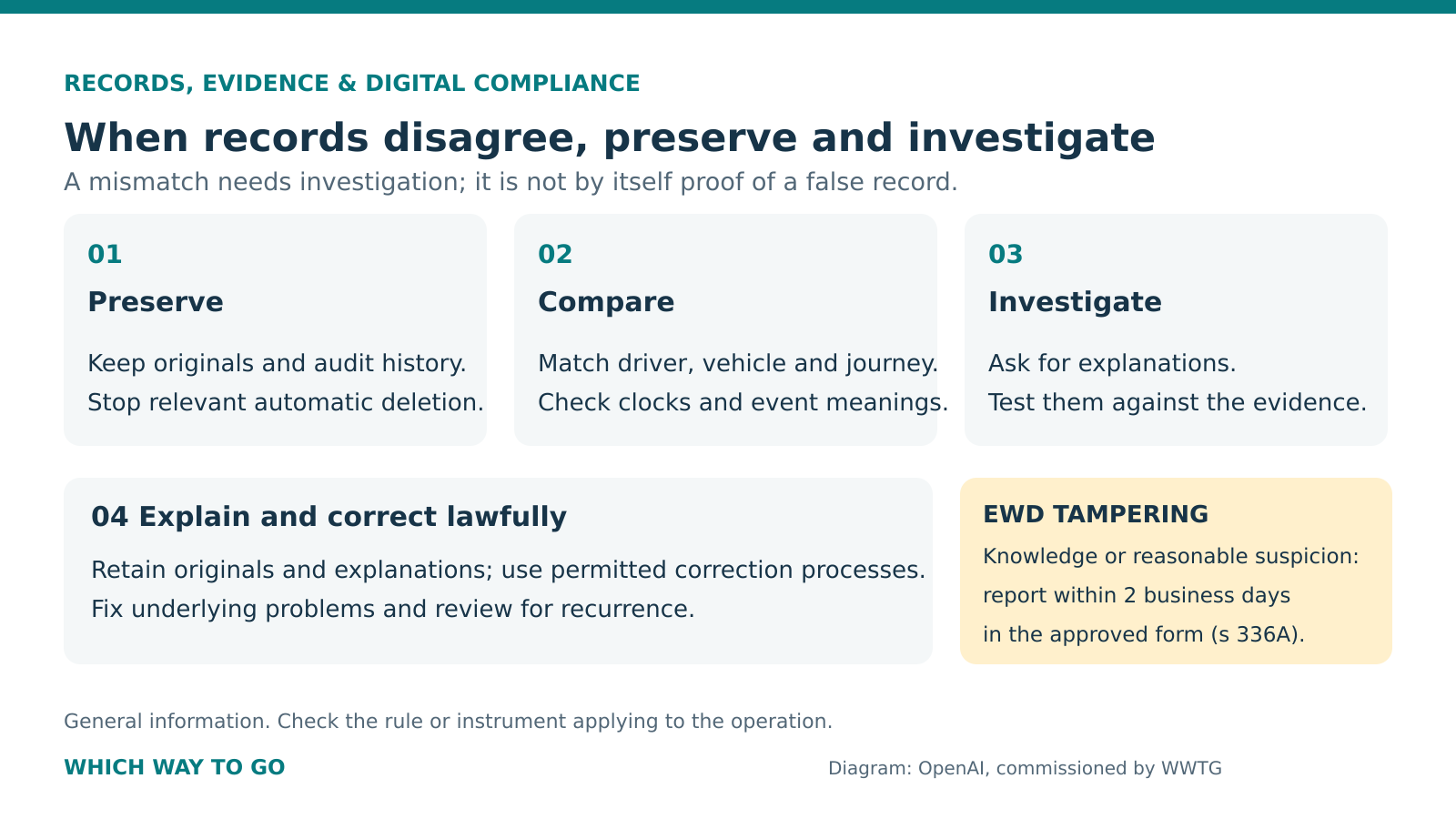
What should a transport business do when its records conflict?
Preserve the originals, investigate the discrepancy and document the explanation and any lawful correction. Do not rewrite records simply to make them agree.
-
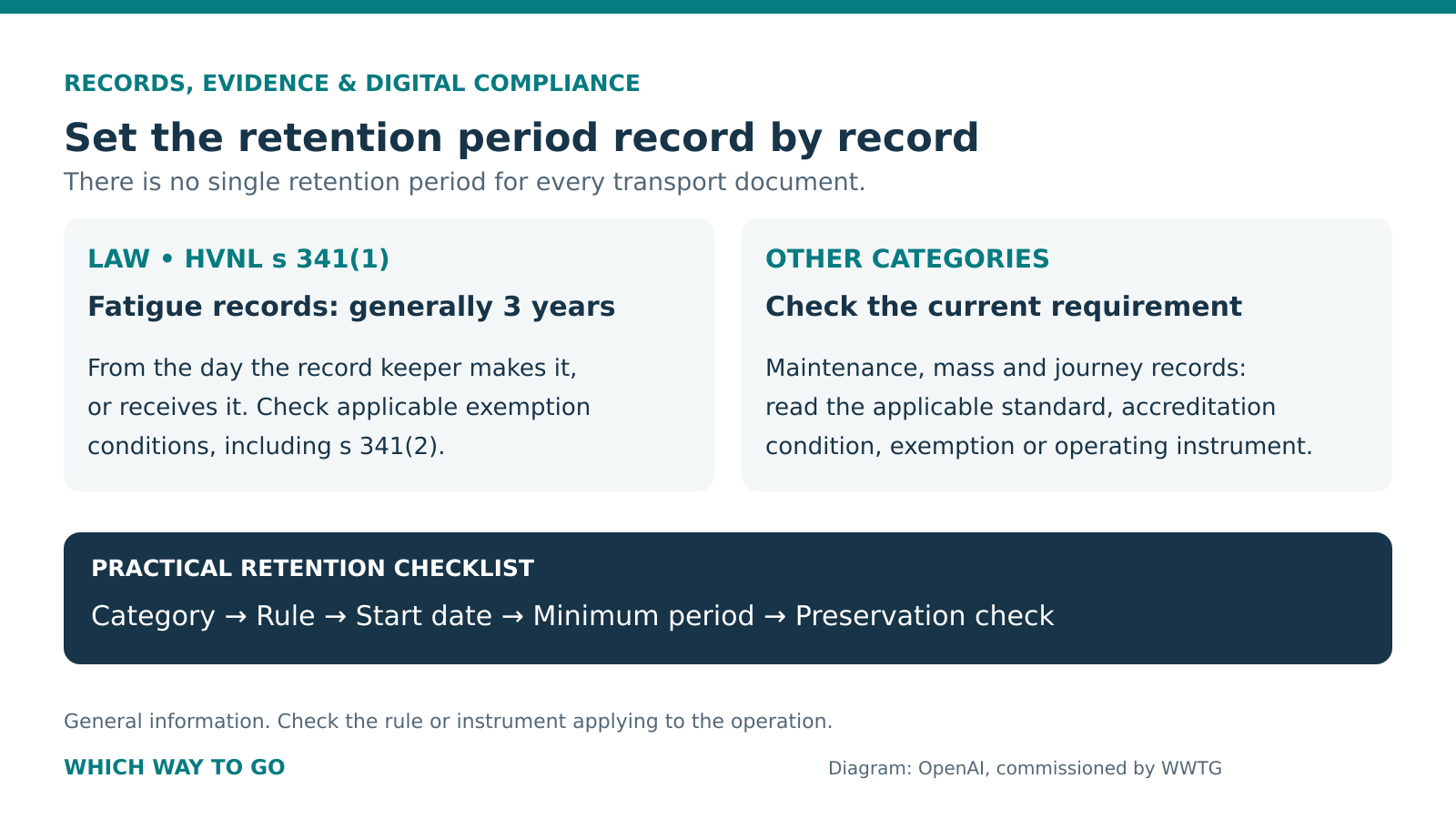
How long must work, maintenance, mass and journey records be retained?
There is no single period for every heavy-vehicle record. For the fatigue records covered by HVNL s 341(1), the record keeper must generally retain them for three years from making or receiving them. Other records need their own rule or condition checked.
-
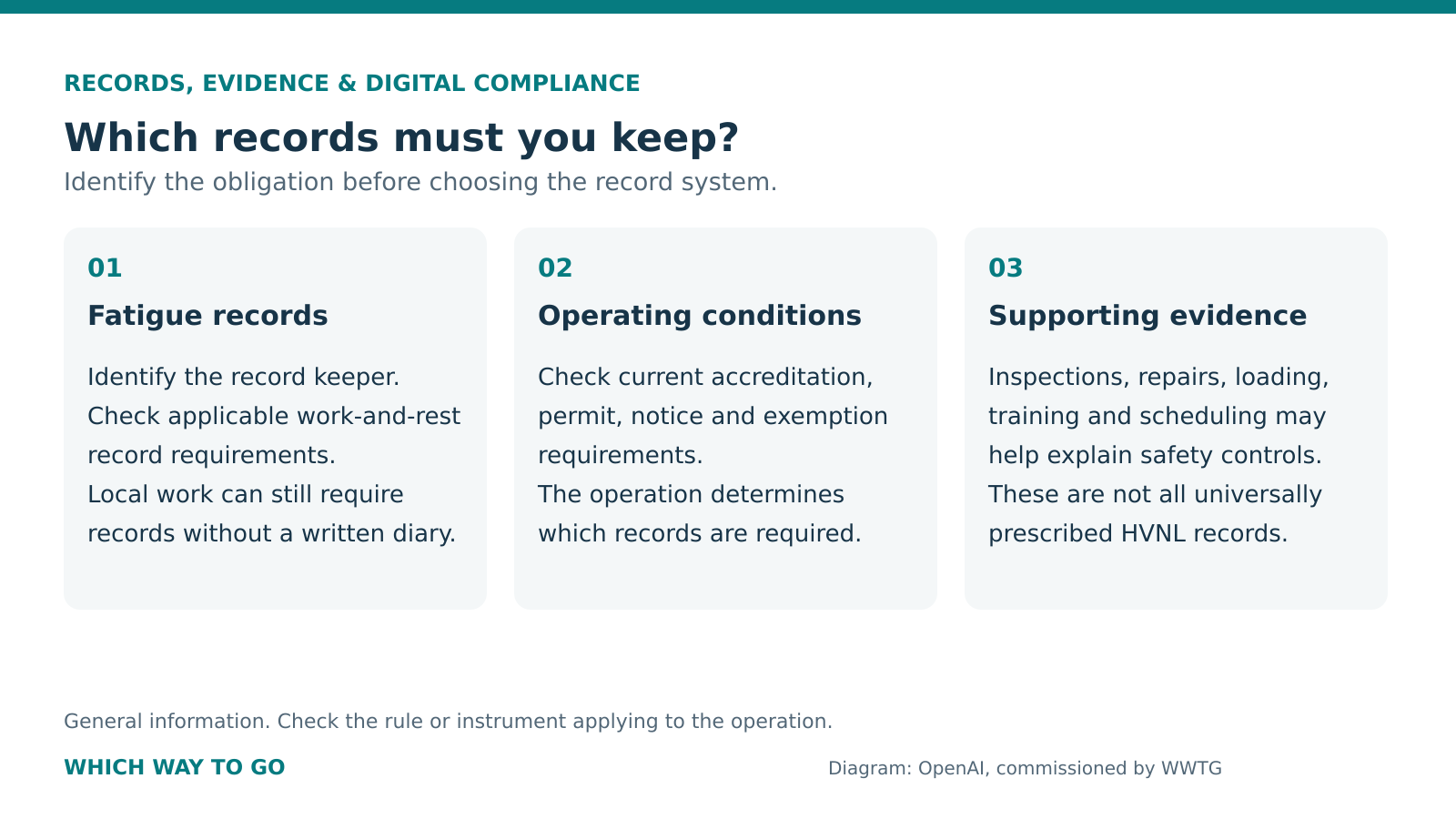
What heavy-vehicle records must an operator keep?
The records depend on the operation. Fatigue record keepers have specific obligations; accreditation, exemptions and access conditions can add others. Useful evidence of safe practices is broader than the documents expressly required by law.
-
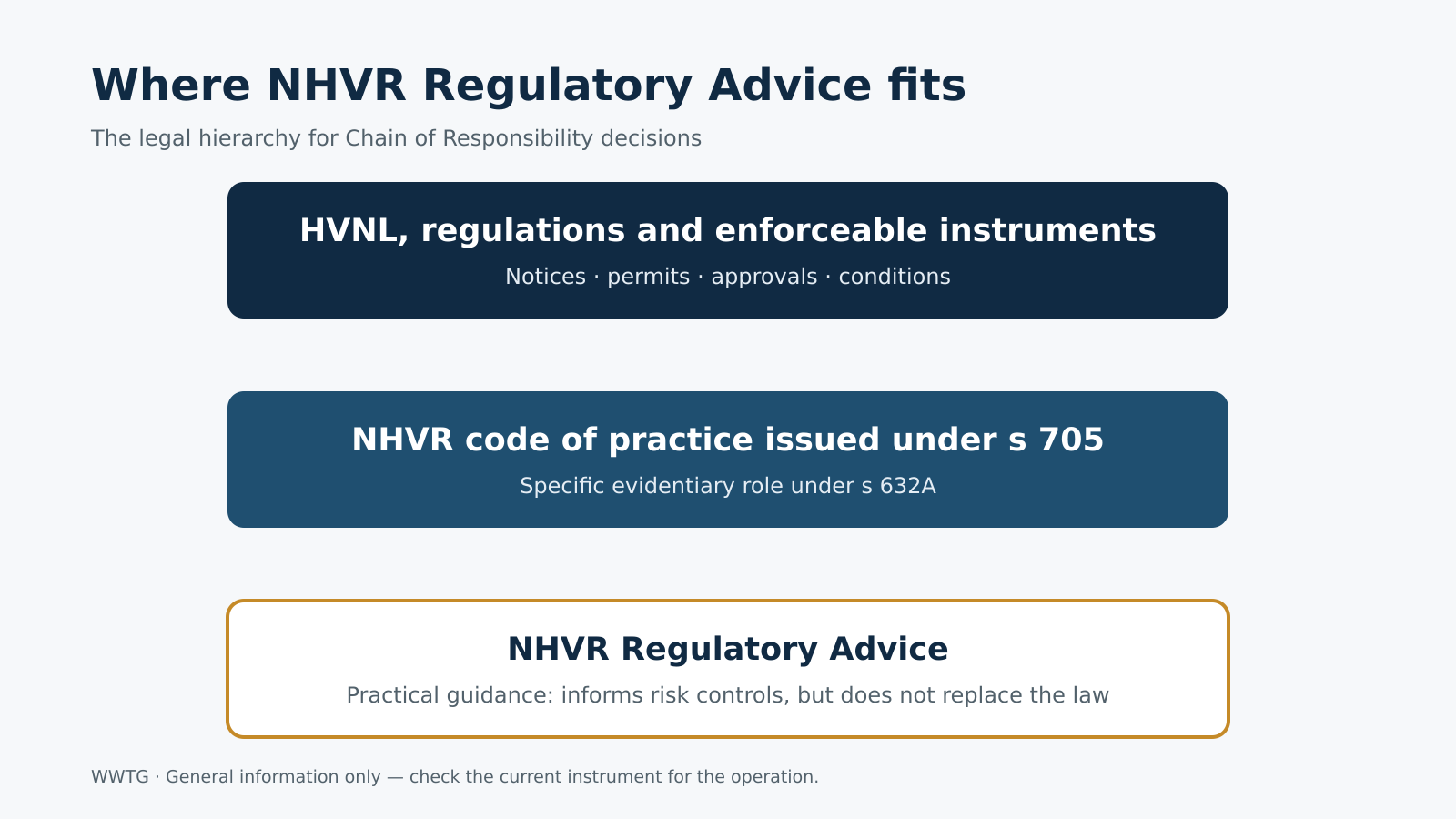
Is NHVR Regulatory Advice law?
No. NHVR Regulatory Advice is general regulator guidance, not legislation, a legal instrument or an NHVR code of practice issued under HVNL s 705. It can help a business identify risks and possible controls, but it does not replace the law or guarantee compliance.
-
What is a heavy-vehicle defect notice?
A heavy-vehicle defect notice is an enforcement notice identifying a vehicle defect and the restrictions, repair and clearance steps required before unrestricted use can resume.
-
What are the HVNL speed compliance duties?
Drivers must obey applicable speed limits, and businesses must ensure their transport activities, requests and contracts do not cause or encourage a heavy-vehicle driver to speed.
-
What are heavy-vehicle roadworthiness and maintenance duties?
A heavy vehicle used on a road must comply with applicable vehicle standards and must not be unsafe, while each Chain of Responsibility party must control the maintenance and roadworthiness risks within its influence.
-
How do the HVNL Primary Duty and WHS laws interact?
The HVNL Primary Duty and work health and safety laws operate alongside each other: one focuses on public risk from heavy-vehicle transport activities and the other on health and safety at work.
-
What is a heavy-vehicle Safety Management System?
A heavy-vehicle Safety Management System is the documented and operating system a business uses to identify, control, monitor and improve the safety risks created by its transport activities.
-
Does the Heavy Vehicle National Law apply in Western Australia?
No. The HVNL does not govern a journey while it is wholly within Western Australia, but WA has its own CoR, fatigue and heavy-vehicle laws, and a WA or NT business can…