Australia is spending millions of dollars to move freight off diesel-dependent roads and onto rail. At the same time, the northern progression of Inland Rail has been put on hold, with the corridor into Queensland being preserved for possible future delivery.
That does not mean completing Inland Rail would have prevented Australia’s current fuel-security problem. But the timing exposes a harder question: when governments suddenly need freight to move by a different mode, how much spare capacity actually exists?
New responses provided directly to WWTG by Port of Brisbane sharpen that question. The Port says rail incentives are a positive step, but “incentives alone are unlikely to deliver the level of mode shift required to meet Queensland’s long-term freight needs”.
The issue is not simply what it costs to put a container on a train. It is whether the railway has the paths, axle capacity, reliability, connections and terminal infrastructure to carry substantially more freight.
Fuel security has turned rail capacity into a live issue
The Commonwealth’s $52 million Transport Resilience and Capacity Kickstart program — TRACK — was created under the National Fuel Security Plan to conserve diesel by shifting freight to more fuel-efficient modes.
Round One offers up to $26 million to rail operators to move additional freight by rail. Applications opened on 11 September and close on 1 October. Later rounds are intended to support maritime freight, including shipping and ports.
That makes TRACK more than a freight subsidy. The Commonwealth is explicitly connecting modal capacity with fuel resilience.
WWTG has already examined how TRACK will test taxpayer value per additional TEU shifted. The next question is whether price is the binding constraint at all.
A subsidy can make an existing rail movement cheaper. It does not itself create another train path, increase an axle limit, lengthen a crossing loop, remove a loading-gauge constraint or build another terminal.
Port of Brisbane: money alone will not create the shift
In written responses to WWTG on 17 September, attributable to a Port of Brisbane spokesperson, the Port identified a range of constraints affecting rail freight performance across South-East Queensland.
“These range from network capacity constraints, such as axle-weight limitations and freight path availability, through to operational disruptions associated with the delivery of major capital works,” the spokesperson said.
The Port said increasing rail’s share would require infrastructure, network operations and commercial decisions to be considered together.
It welcomed both TRACK and Queensland’s Rail Freight Container Incentive Scheme, saying they could improve the commercial competitiveness of rail freight.
But its qualification is important.
“Incentives alone are unlikely to deliver the level of mode shift required to meet Queensland’s long-term freight needs.”
The Port said sustained growth would also depend on network capacity, reliability, operational efficiency and connectivity between freight hubs and the Port.
That position is consistent with Queensland’s own Freight Delivery Plan, which WWTG examined earlier this month. The plan contains 70 actions and explicitly aims to enable more freight on rail by improving network performance, reliability and access.
Separate joint government planning has also been examining possible short, medium and longer-term improvements between a future Inland Rail intermodal terminal at Ebenezer and the Port of Brisbane. Parts of the existing rail connection are shared with passenger services.
The terminal land has been preserved
There is another piece of the puzzle west of Brisbane.
National Intermodal has acquired a 170-hectare site near Toowoomba adjoining the existing Queensland Rail network. In a direct response to WWTG, National Intermodal said the land includes space for a potential future intermodal hub and part of the Inland Rail corridor.
“Land for the terminal hub and Inland Rail corridor will be preserved,” a National Intermodal spokesperson said.
The company said it would explore opportunities for the site ahead of any potential future hub development.
Port of Brisbane described the acquisition as a positive sign of continued confidence in regional freight and logistics growth, but said it did not fundamentally change its assessment of the freight task.
It said an intermodal terminal such as Charlton/Gowrie could strengthen regional supply chains, but the focus still had to be on “the quality, reliability and capacity of the broader rail network” connecting freight with the Port and other markets.
And this is where Inland Rail becomes difficult to ignore
In May, the Australian Government refocused Inland Rail on completing the Beveridge-to-Parkes sections, while preserving the corridor north of Parkes for possible future delivery.
The eventual Inland Rail vision remains a 1,600-kilometre Melbourne-to-Brisbane freight connection. In Queensland, the preserved design includes new and upgraded track from the NSW border to Gowrie and a new dual-gauge route from Gowrie to Helidon through the Toowoomba Range, including a proposed 6.2-kilometre tunnel.
The Commonwealth’s decision therefore creates an unusual policy juxtaposition.
Australia is preserving a future railway intended to add freight capability into Queensland while simultaneously spending public money trying to extract more freight movement from the networks available today because conserving diesel has become a national priority.
That is not evidence that the Inland Rail decision caused the fuel problem, nor that completing the northern sections would necessarily be the best response to it.
It does, however, raise a legitimate infrastructure question: what value should governments place on spare freight capacity before a disruption makes that capacity urgent?
Queensland Rail still holds a key number
WWTG asked Queensland Rail on 13 September how much practical capacity is currently available for additional freight services on the West Moreton system between Toowoomba, the Darling Downs and South-East Queensland.
Questions covered train length, axle load, loading gauge, Toowoomba Range gradients, crossing loops, available train paths, potential Charlton operations and the upgrades that would be required for a substantial transfer of freight from road to rail.
Queensland Rail sought additional time to respond. On 18 September its media team told WWTG it would work to provide the information as soon as possible the following week.
No substantive response had been received at the time of publication. WWTG will update this report if it is provided.
Other states are answering the capacity question differently
The contrast becomes clearer when Queensland is placed beside the rest of Australia.
Western Australia: subsidise, upgrade — and potentially own
Western Australia already provides a $50-per-TEU subsidy for eligible containers moved by rail through Fremantle. More than 20 per cent of shipping containers through Fremantle Inner Harbour move by rail.
WA is also planning a new freight rail connection to the future Westport container terminal and duplication of about eight kilometres of existing freight track between Kwinana and Cockburn. Its Agricultural Supply Chain Improvements program includes upgrades or extensions to 11 grain sidings and work on regional rail infrastructure.
At the same time, the WA Government has introduced legislation creating a framework for a possible acquisition of the state’s leased freight rail network. WWTG examined what the WA freight-rail buyback Bill could mean for trucking.
The Bill does not itself complete a buyback, but WA’s approach illustrates the range of levers now being considered: price incentives, infrastructure investment and potentially network ownership.
New South Wales: the passenger-freight path problem
NSW freight-policy work has identified capacity constraints where freight and passenger services share metropolitan rail infrastructure. Its freight reform work has considered additional freight paths and, longer term, greater separation between freight and passenger networks.
That has an obvious parallel with Queensland: paying for another rail movement only helps if a usable path is available when the freight needs to move.
Northern Territory: build the hubs and sidings
In the Northern Territory, the Australian Government has committed $440 million in planned equity for Regional Logistics Hubs along the Darwin–Tarcoola railway.
The proposal includes terminals, rail sidings, warehousing and enabling infrastructure and is explicitly intended to increase supply-chain capacity and reliability while reducing reliance on trucks for long-distance freight.
That is a different intervention again: rather than only subsidising a movement, it seeks to add the infrastructure that allows different modes to connect.
Shipping is the next part of the equation
TRACK itself points to the next question. Subsequent rounds are intended to support more freight by sea as well as rail.
If Australia wants rail and shipping to act as a freight safety valve when diesel supply or road capacity is under pressure, the relevant measure cannot simply be the size of an incentive.
It has to include the practical capacity of rail networks, terminals, ports, ships and connecting roads — and how quickly that capacity can be activated during a disruption.
Are we funding freight movements, or freight capacity?
That may be the distinction exposed by the current fuel response.
TRACK can alter the economics of an individual freight movement. Queensland’s incentive scheme can reduce below-rail costs. WA’s subsidy can make a container movement more competitive.
But physical capacity comes from infrastructure, operating systems and available equipment.
Port of Brisbane’s response brings those two policy problems together: encouraging a container onto rail and ensuring there is enough railway to carry it are not the same thing.
Across Australia, governments are now experimenting with subsidies, network upgrades, corridor preservation, logistics hubs, potential network acquisition and, soon, maritime incentives.
The fuel shock gives those decisions a new test.
When Australia needs freight to change modes quickly, is the capacity already there?
WWTG has been following this issue:
- Rail operators put a price on freight shift: how TRACK will test taxpayer value per TEU
- Queensland freight plan sets 70 actions, with rail rebates and NAAS rollout among the first moves
- WA’s freight rail buyback Bill: what it could mean for trucking
Sources: Port of Brisbane direct written response to WWTG, 17 September 2026; National Intermodal direct written response to WWTG, 14 September 2026; Australian Government Department of Infrastructure TRACK program; Inland Rail project updates; Queensland Department of Transport and Main Roads Freight Delivery Plan and Port of Brisbane further planning; Transport WA freight-on-rail program; Main Roads WA Westport Freight Rail Program; Transport for NSW freight policy reform material; Infrastructure NT Regional Logistics Hubs.
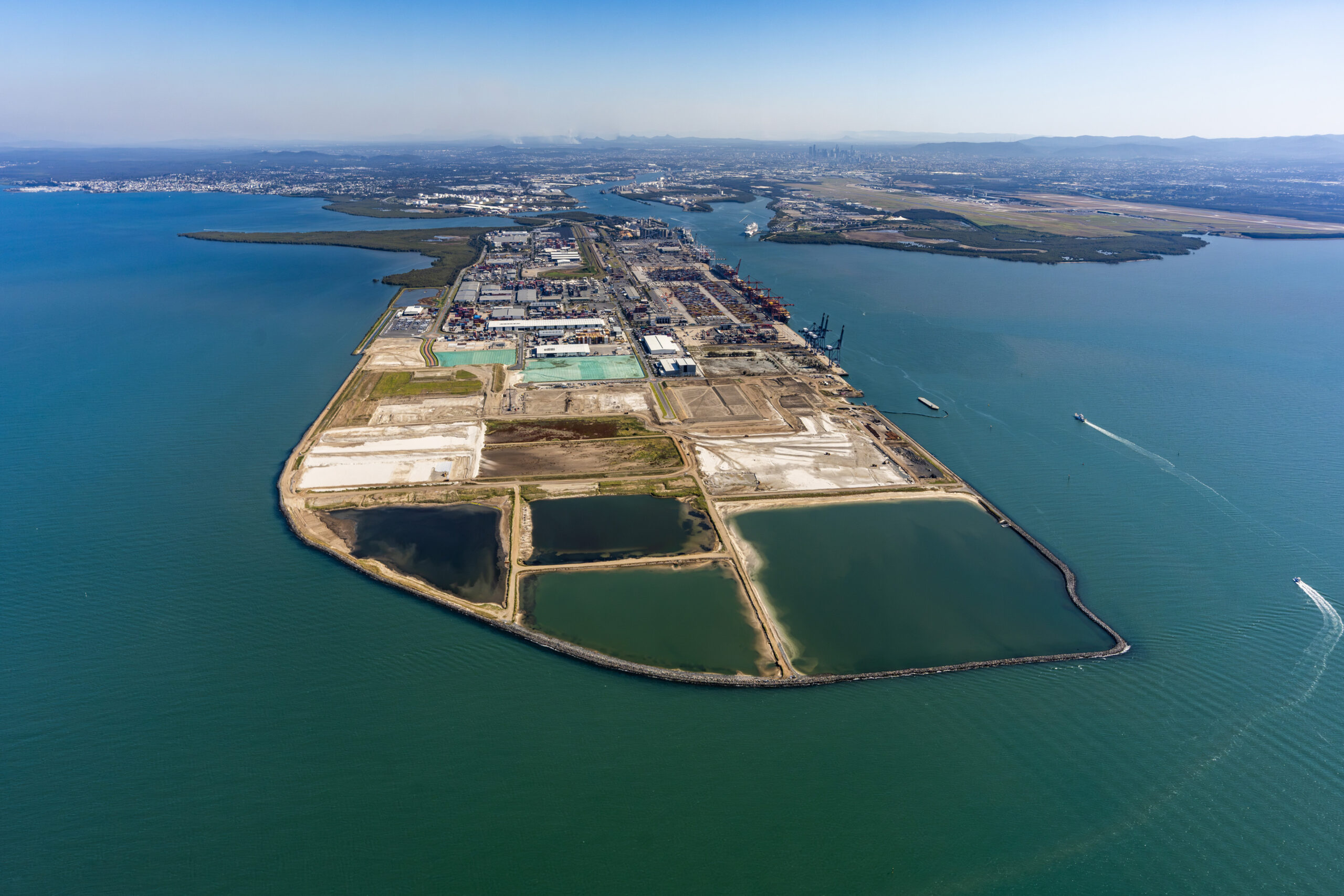
Image: Port of Brisbane. Supplied to WWTG.