-
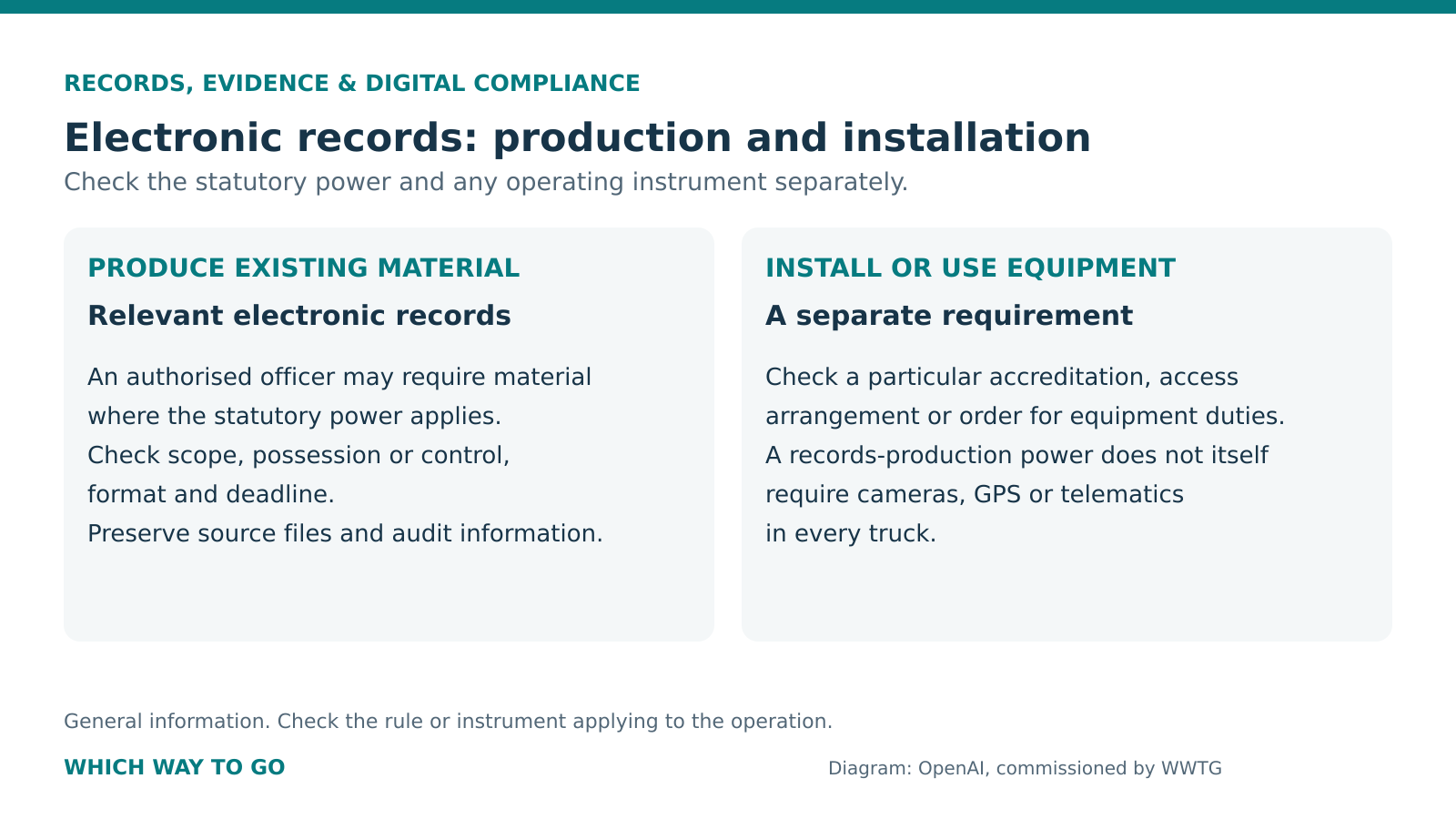
Can the NHVR require telematics, GPS, camera and electronic records?
Yes, an authorised officer can require relevant electronic material where a statutory power applies. That is different from a universal requirement to install GPS, cameras or telematics in every truck.
-
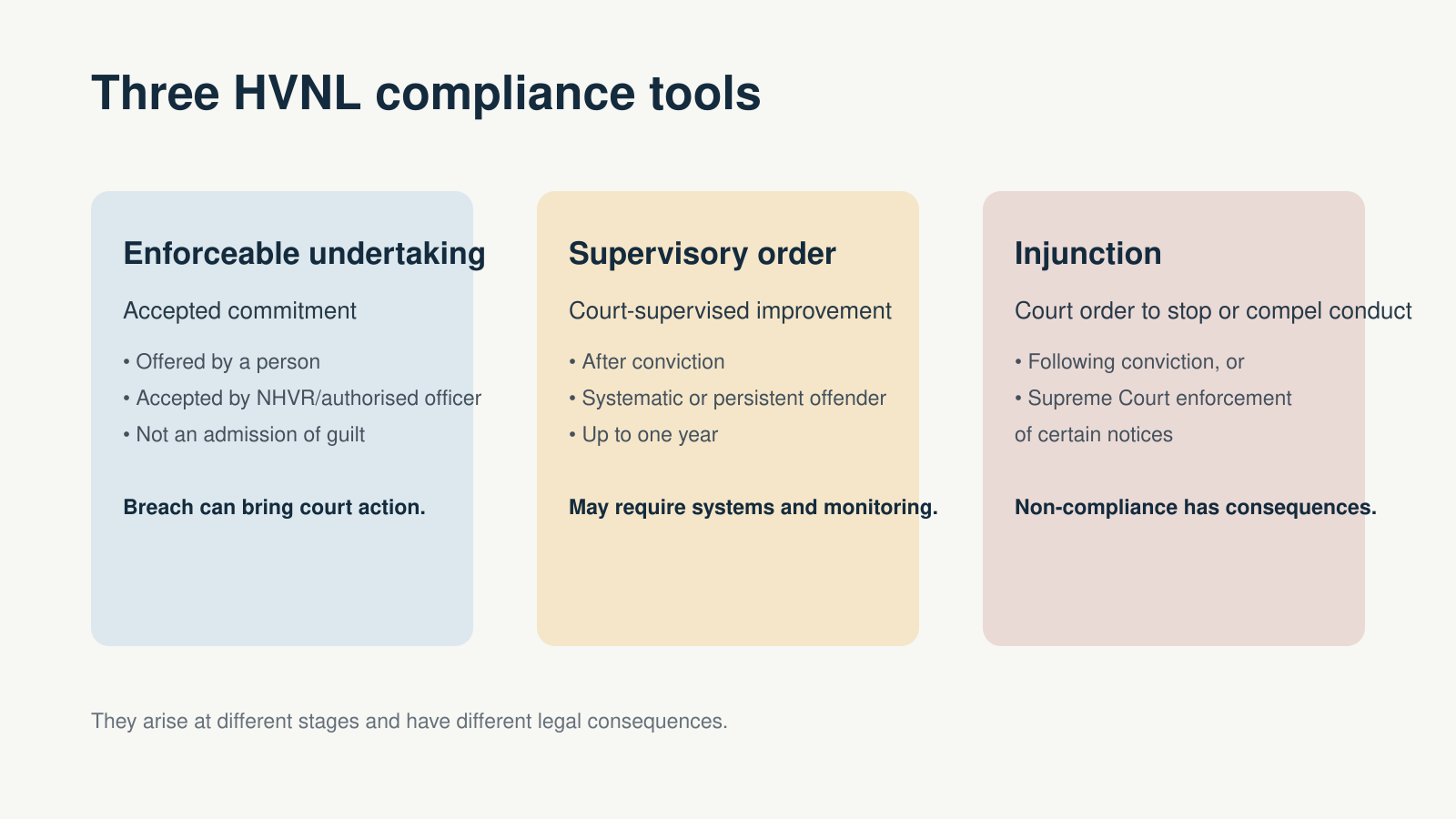
What are Supervisory Intervention Orders, enforceable undertakings and injunctions?
They are different compliance tools: an enforceable undertaking is an accepted commitment, while a Supervisory Intervention Order and an injunction are court orders.
-
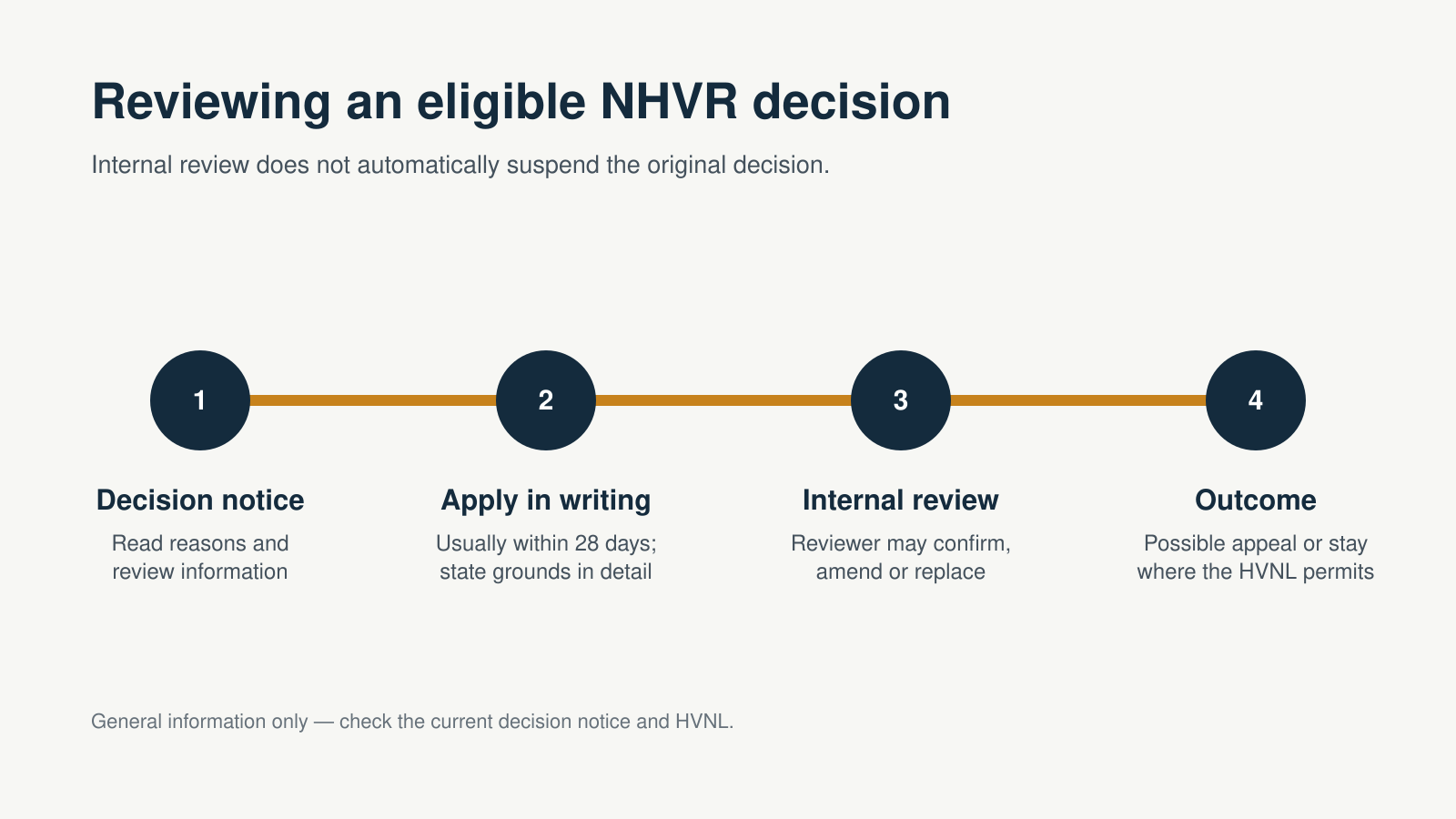
Can I ask the NHVR to review a decision?
Yes—but only decisions identified as reviewable in Schedule 3 of the HVNL or the national regulations can be internally reviewed. An application normally must be made in writing within 28 days and state detailed grounds.
-

What happens during an NHVR investigation?
An NHVR investigation gathers and tests evidence about suspected serious HVNL contraventions, gives affected parties an opportunity to be heard, and can end with no further action, education, a notice, an undertaking or prosecution.
-

What is a notice to produce, and what information must be supplied?
A notice to produce is a statutory HVNL requirement to provide specified documents, information or evidence, and ignoring it can create a separate offence even if the underlying allegation is disputed.
-
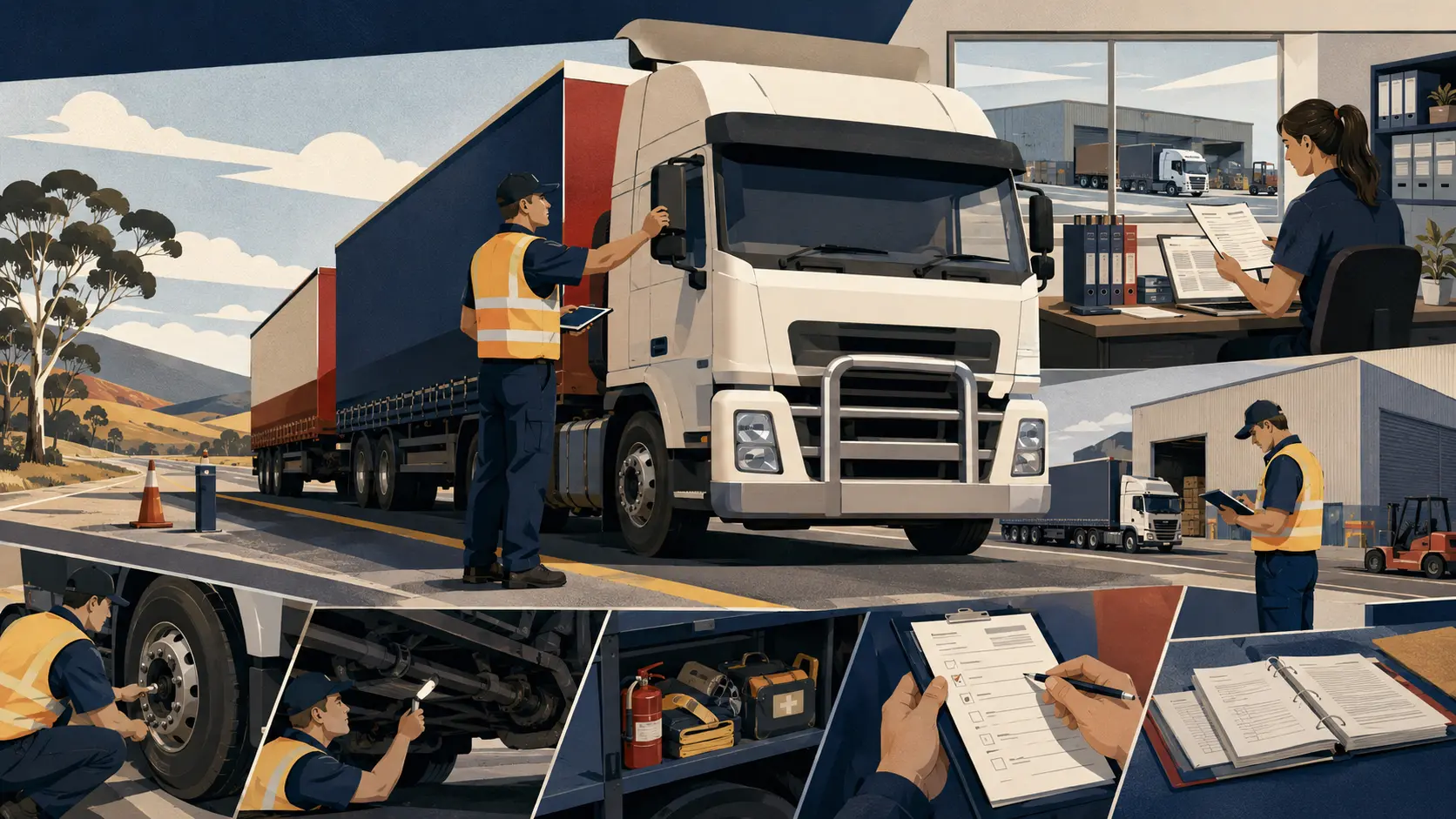
What powers do authorised officers have at a roadside intercept or business premises?
HVNL authorised officers can stop, direct, inspect, test and in defined circumstances search heavy vehicles, and can enter relevant business premises for monitoring or investigation, but each power has statutory limits, triggers and identification requirements.
-
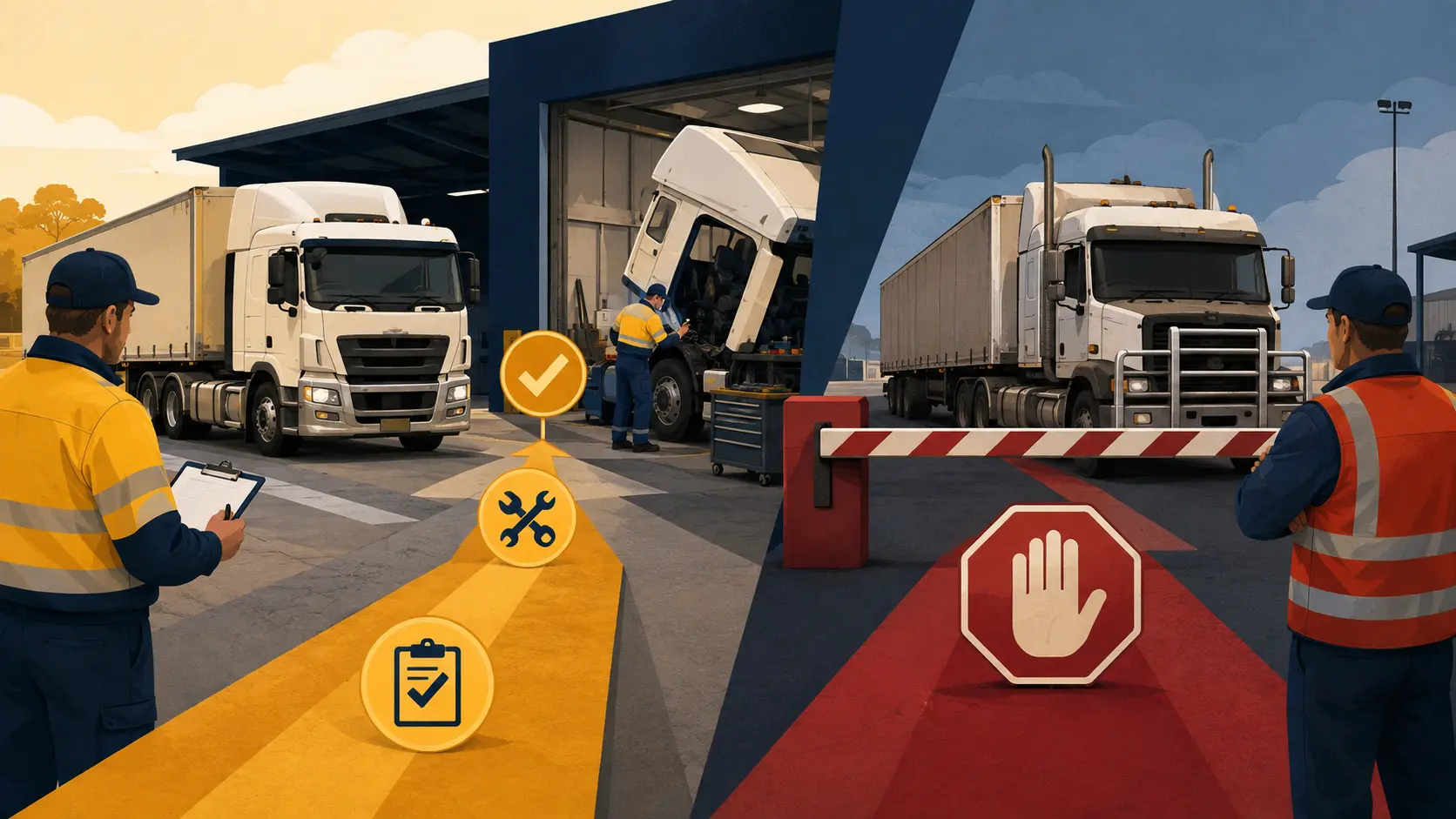
What are improvement and prohibition notices?
An improvement notice requires a person to correct a continuing or repeatable HVNL contravention, while a prohibition notice stops an activity involving a heavy vehicle that presents an immediate or imminent serious safety risk.
-
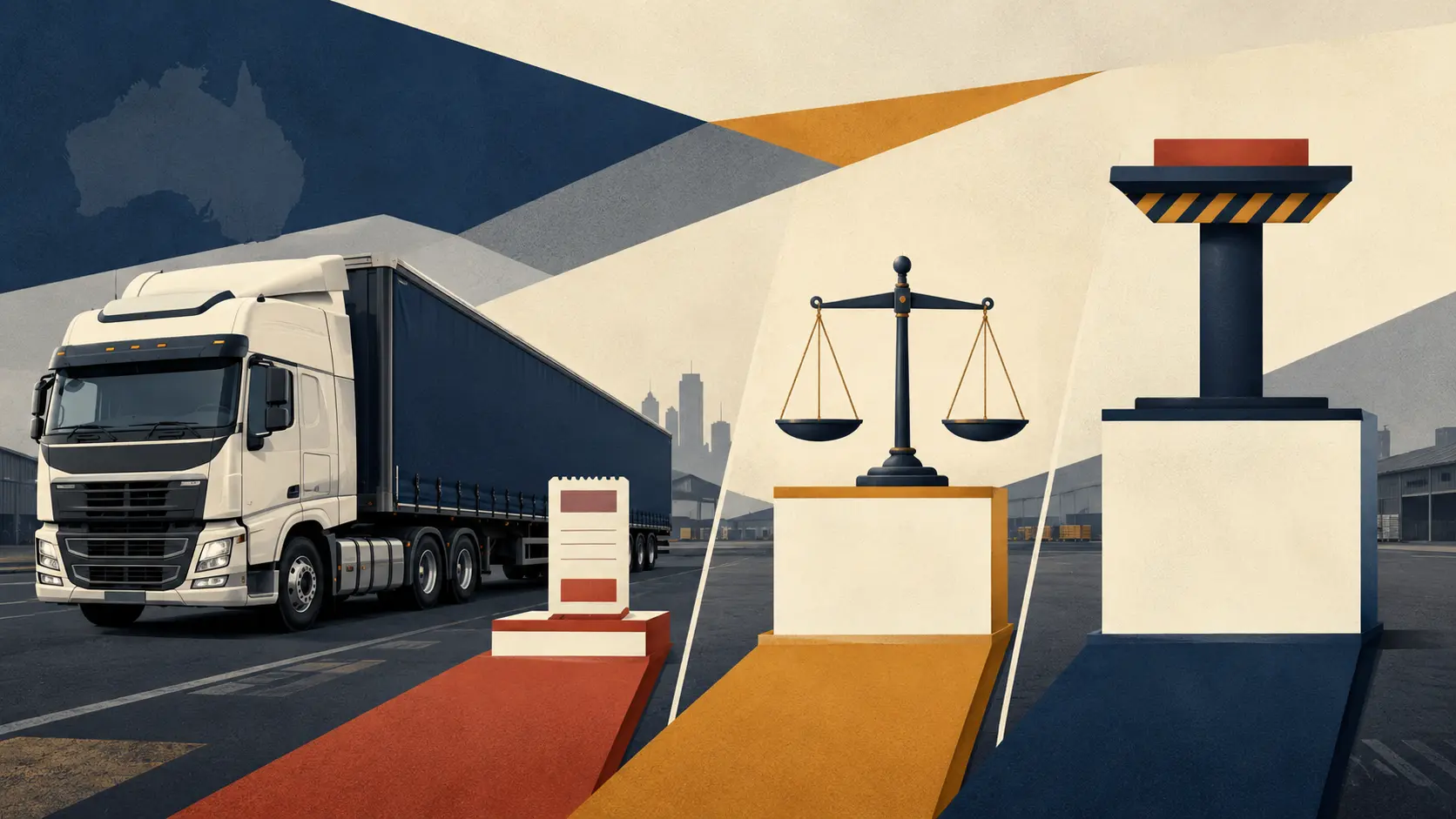
What is the difference between an infringement penalty, a court fine and a maximum penalty?
An infringement penalty is the amount offered to resolve a prescribed allegation without a court hearing, a court fine is the amount a court actually imposes after guilt is established, and the maximum penalty is the statutory ceiling the court cannot exceed.
-
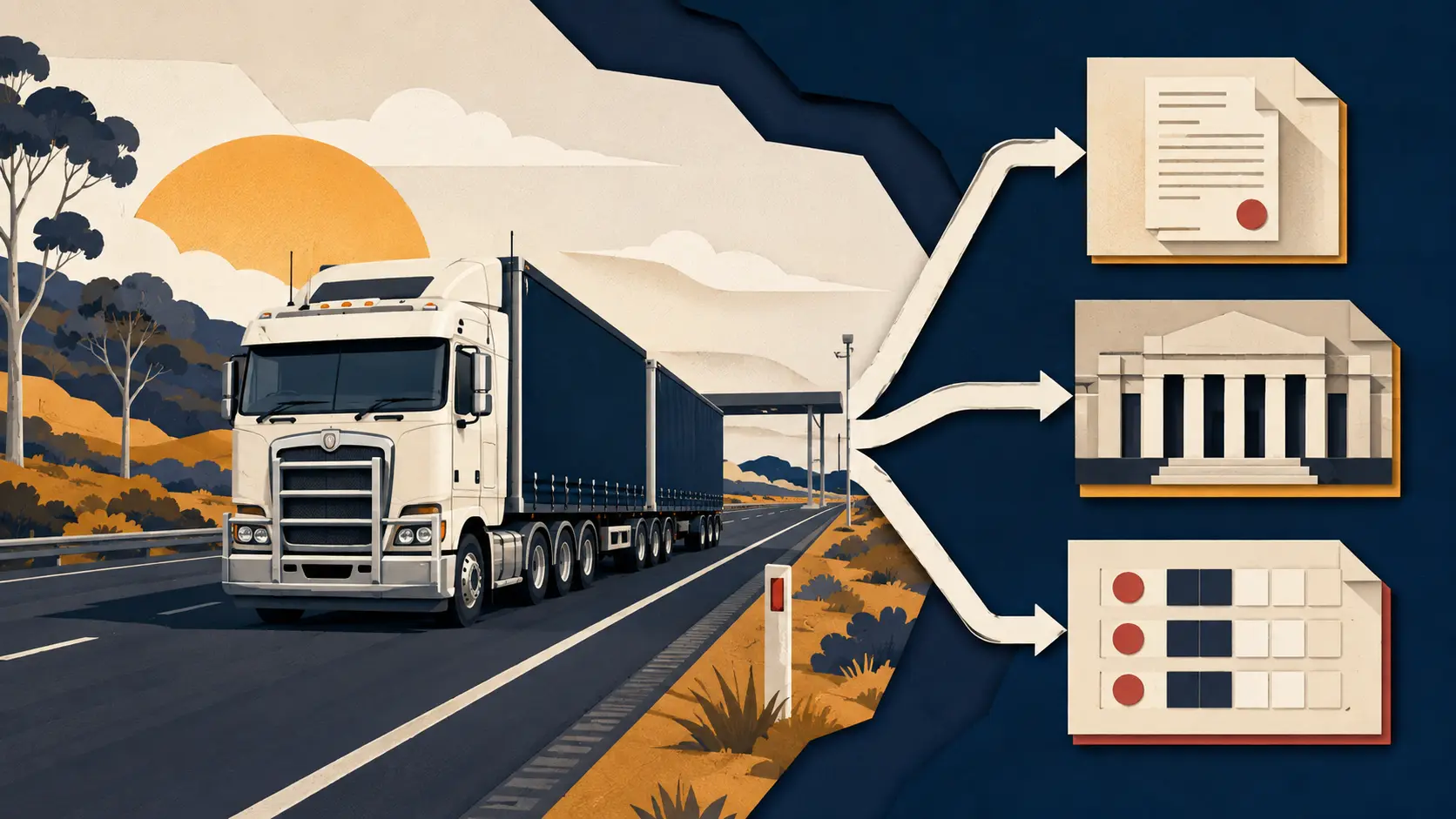
How do HVNL penalties, infringement notices and demerit points work?
The HVNL sets maximum court penalties, allows infringement notices for prescribed offences, and leaves demerit points to participating states and territories; the three consequences are related but not interchangeable.