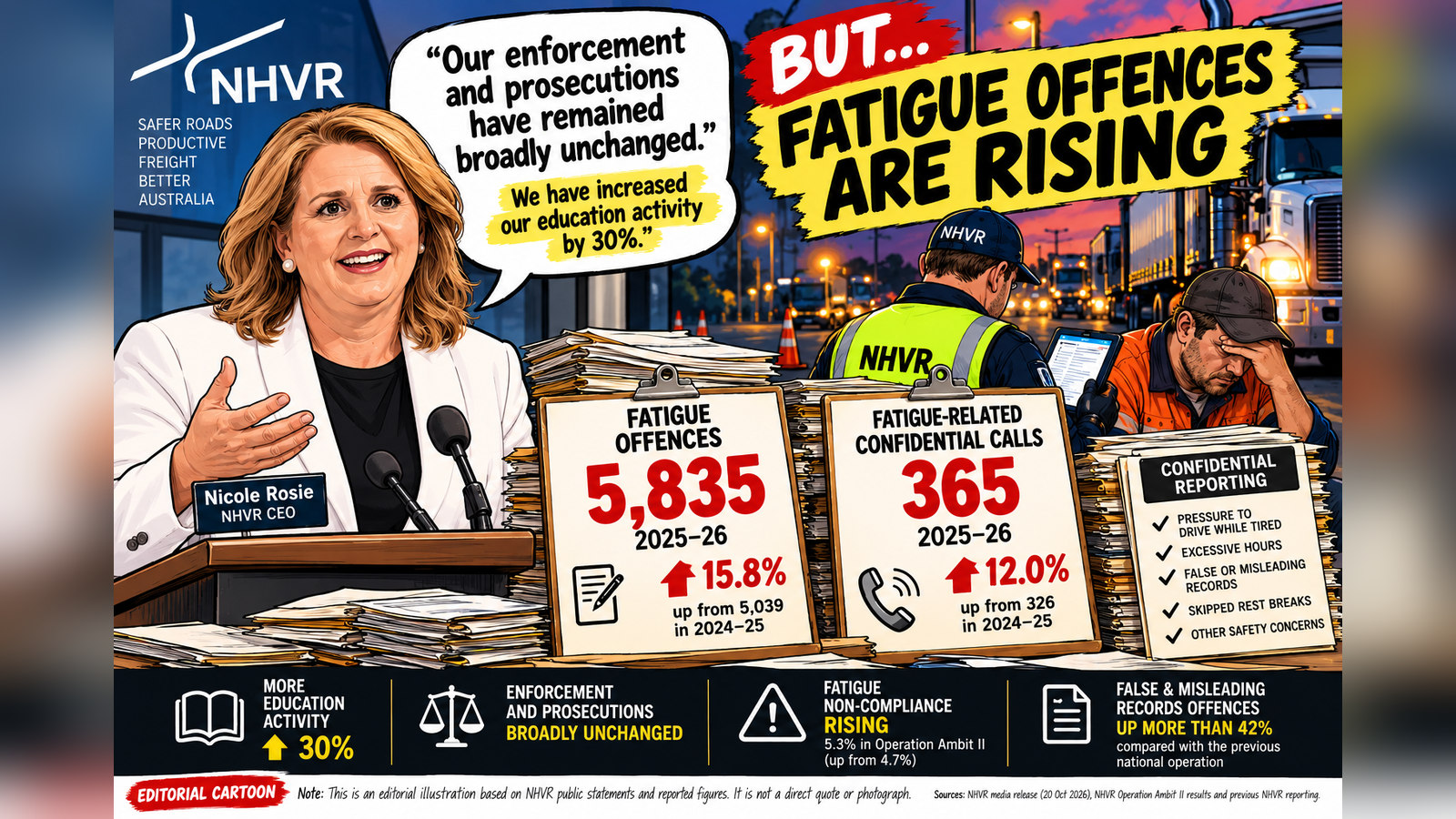
The National Heavy Vehicle Regulator recorded 5,835 fatigue-related offences across its jurisdictions in the 2025–26 financial year, compared with 5,039 the previous year — an increase of approximately 16 per cent.
The figures were released by the NHVR on 20 October 2026 as part of National Safe Work Month.
Reports about fatigue pressures made through the regulator’s Heavy Vehicle Confidential Reporting Line also increased. The NHVR received 365 fatigue-related reports in 2025–26, up from 326 in 2024–25. It said reports concerned pressure to work through rest breaks, excessive working hours and demands to work while fatigued.
What the figures show — and what they do not
The published offence totals cover the NHVR’s jurisdictions, not necessarily every heavy vehicle offence recorded nationally by all enforcement bodies. The release does not provide a breakdown by offence severity, jurisdiction, type of breach or enforcement activity. The increase therefore cannot, on its own, establish whether fatigue-related offending became more prevalent or whether detection and enforcement changed.
The confidential-report figures count reports received, not substantiated breaches. They nevertheless provide a separate indication of concerns being raised with the regulator.
Looking back: fatigue and confidential reporting
The confidential reporting line has operated since 2018, and fatigue was among the issues raised in its earliest months. The NHVR reported 1,198 calls across all categories in 2020–21, with 942 reports investigated. These historical all-category figures are not directly comparable with the 326 and 365 fatigue-related calls reported for 2024–25 and 2025–26.
More recent enforcement operations also identified fatigue concerns. During Operation Omega II in 2025, 131 of 2,985 intercepted vehicles were found non-compliant with fatigue requirements, and 172 fatigue-related offences were recorded. In Operation Ambit II in March 2026, fatigue non-compliance rose from 4.7% to 5.3% compared with the preceding national operation, while false or misleading record offences increased by more than 42%. These are operation-specific findings, not an annual industry-wide offence rate.
The latest annual totals show a 15.8% rise in recorded fatigue offences (5,039 to 5,835) and a 12.0% rise in fatigue-related confidential calls (326 to 365). They do not show how many unique people called, how many allegations were substantiated, or whether underlying fatigue behaviour increased. Nor should recorded offences be equated with fines or prosecutions.
In an earlier WWTG interview, NHVR CEO Nicole Rosie described increased education activity alongside broadly unchanged enforcement and prosecutions. That position concerns different measures and is not necessarily contradicted by higher offence detections. The NHVR’s 20 October figures and comments were attributed to Chief Operations Officer Paul Salvati, not Rosie.
Further sources: NHVR Annual Report 2020–21; Operation Omega II, June 2025; Operation Ambit II, August 2026.
What happens after a confidential report?
A confidential report may prompt assessment, intelligence gathering or an investigation, and some matters can lead to compliance action. However, the NHVR’s published 2025–26 figures do not identify how many of the 365 fatigue-related reports led to infringement notices, prosecutions or other outcomes. Nor do they establish whether the additional reports contributed to the 5,835 recorded fatigue offences. WWTG has requested a multi-year breakdown from the regulator to clarify the relationship between reports, investigations and enforcement outcomes.
Fitness to drive duties
NHVR Chief Operations Officer Paul Salvati linked the figures to changes to the Heavy Vehicle National Law in August 2026, which expanded fitness-to-drive obligations beyond fatigue to include other conditions affecting a driver’s ability to operate safely.
The NHVR says drivers who are unfit to drive have the authority to stop, and employers must support that decision under the updated law. Operators and schedulers should ensure work plans and commercial deadlines do not pressure drivers to continue when unfit.
The NHVR encouraged people who know of commercial pressure overriding fatigue management to raise concerns through its confidential reporting line.
Source: NHVR, 20 October 2026.