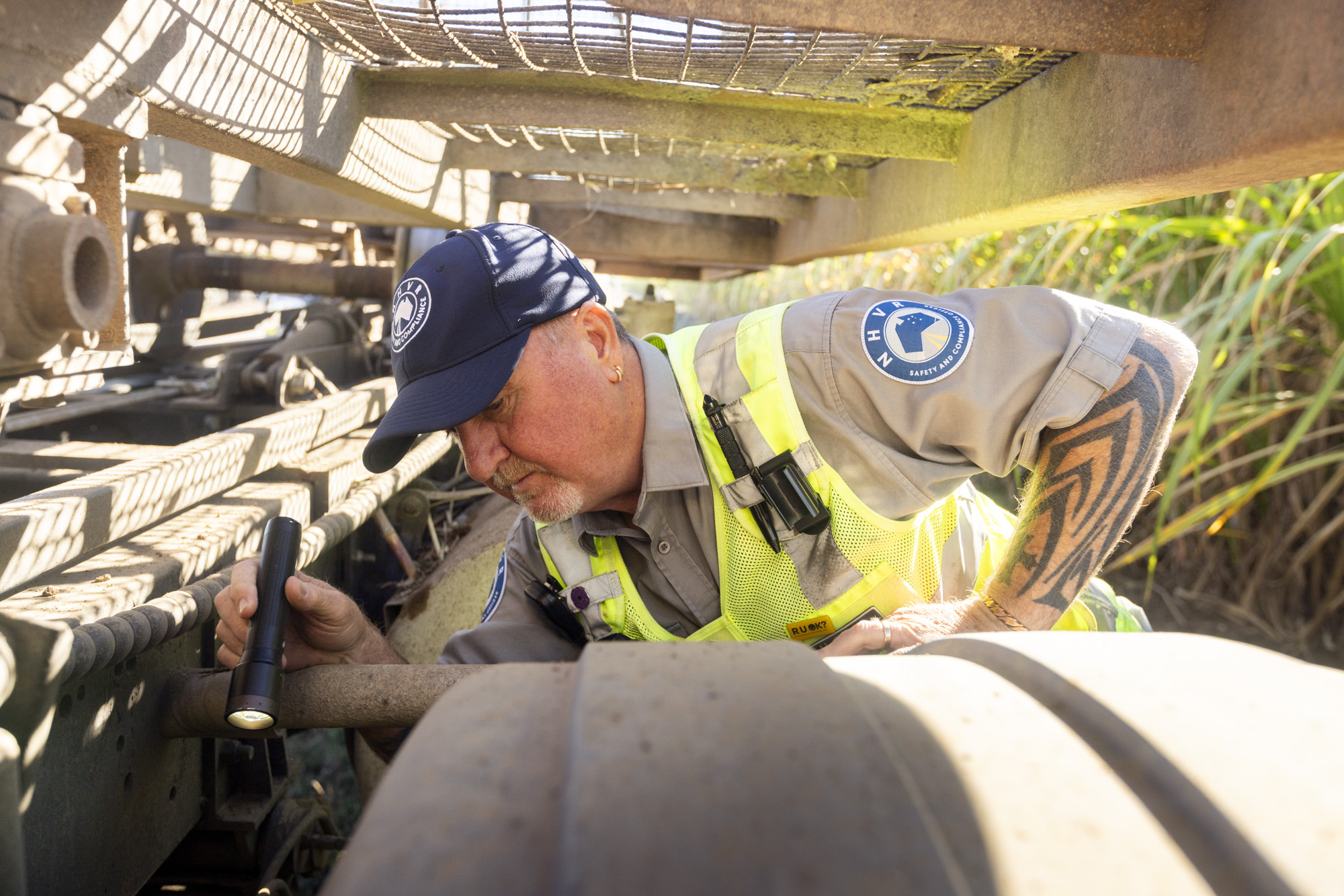
Queensland’s 2026 cane crush has produced a better heavy-vehicle compliance result, with the National Heavy Vehicle Regulator reporting an overall non-compliance rate of 27 per cent — down from 38.8 per cent in its 2025 sugarcane operation.
There is, however, an important qualification when comparing the two figures.
The NHVR says the 2026 campaign was its first coordinated sugarcane operation across all Queensland harvesting areas. In a written response to Which Way To Go, an NHVR spokesperson confirmed that last year’s sugarcane operation was run in Far North Queensland.
That means the headline percentages show an improvement between the two operations, but they should not automatically be treated as a like-for-like statewide comparison.
What inspectors found
The NHVR told WWTG that 140 intercepts were conducted during Operation Humidity and 81 vehicles, trailers or prime movers were found to be defective.
The regulator broke the defect notices down as 15 major, 58 minor and 13 self-clearing notices.
Its published results also reported 12 mass exceedances and seven load-restraint infringements, while roadworthiness remained a concern.
The NHVR has pointed to extensive engagement with the sugarcane industry as part of the improvement. Its pre-season work included information sessions covering loading requirements, and the regulator says subsequent engagement saw more consistent loading, improved cane bins and greater attention to load restraint.
Asked by WWTG whether particular education initiatives or targeted campaigns could be linked to the change in the statistics, NHVR media referred back to that industry work outlined in its media release.
A positive result — with context
The fall in the reported non-compliance rate is positive, particularly where better loading practices and load restraint reduce risks for drivers and other road users.
But the different geographic scope matters when interpreting the year-on-year percentage. WWTG asked whether the 2025 and 2026 operations were comparable in regions covered, fleet types targeted and number of intercepts. NHVR confirmed the 2025 operation’s Far North Queensland location but did not provide a complete like-for-like comparison across those measures.
That does not negate the improvement. It means the 27 per cent result is best read as the outcome of this year’s broader operation rather than proof, on the information currently available, of a 11.8 percentage-point statewide improvement across an identical enforcement sample.
The remaining roadworthiness findings also show why the operation matters beyond the headline compliance rate: 81 defective units were identified from 140 intercepts, including 15 major defect notices.
Image supplied by the National Heavy Vehicle Regulator.