What happens during an NHVR investigation?
Short answer
An NHVR investigation gathers and tests evidence about suspected serious HVNL contraventions, gives affected parties an opportunity to be heard, and can end with no further action, education, a notice, an undertaking or prosecution.
Plain English
The NHVR says its investigators focus on serious HVNL contraventions, particularly the primary safety duties of Chain of Responsibility parties and executives. Investigators are authorised officers and may use statutory information-gathering, entry, inspection, interview and evidence-preservation powers.
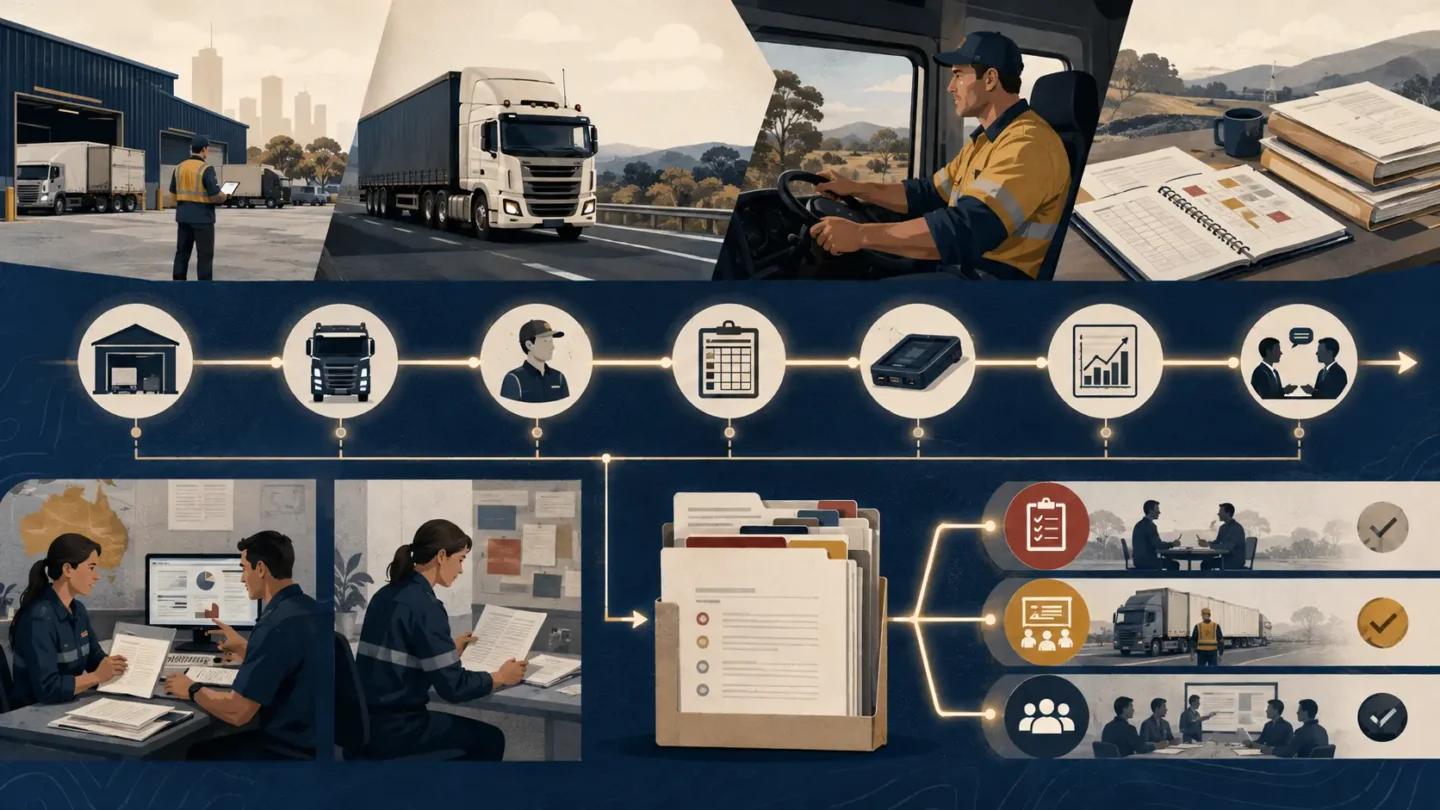
An investigation may begin from an intercept, camera or telematics information, a crash or incident, a confidential report, a referral, a pattern of defects or infringements, or other intelligence. Evidence can include work diaries, rosters, GPS and camera data, fuel and toll records, maintenance records, contracts, loading information, training records, emails and procedures.
The NHVR states that investigations are evidence-based, objective, impartial and conducted according to natural justice. The subject should be made aware of the investigation and given an opportunity to be heard before adverse formal findings or action. There is no single fixed timeframe: complexity, risk and urgency affect how long the work takes.
What this means operationally
Preserve relevant paper and electronic evidence immediately. Appoint a single response coordinator, notify executives and insurers where appropriate, obtain independent legal advice, map the relevant transport activities and safety controls, and respond accurately within every statutory deadline.
Do not alter records, coach witnesses, create retrospective documents or make blanket claims of legal professional privilege. Genuine cooperation can help the investigation progress, but it does not guarantee a particular outcome.
Who it applies to
Operators, drivers, executives and all other Chain of Responsibility parties, as well as employees, contractors and record holders who may possess relevant evidence.
Example
A pattern of fatigue and speeding detections leads investigators to compare work diaries with GPS, camera, fuel, roster and payment data. The investigation then examines whether the operator’s scheduling, supervision and executive oversight controlled the identified risks.
Exceptions and traps
A roadside check, defect or isolated infringement does not automatically mean a full NHVR investigation. Police, state agencies and local authorities may conduct or refer separate investigations, and an NHVR matter can overlap with workplace-safety, road-traffic or criminal law.
Possible outcomes depend on the evidence and risk. They include no further action, education, a formal warning, improvement or prohibition notice, enforceable undertaking where legally available, referral for prosecution and court orders. Western Australia and the Northern Territory use their own domestic heavy-vehicle regimes.
Legal foundation
Heavy Vehicle National Law Chapter 9 authorised-officer powers, including ss 497-500, 521, 541-570A and 587-588; Chapter 10 sanctions and prosecutions; s 735A legal professional privilege
Sources & primary documents
- www.legislation.qld.gov.au/view/whole/html/inforce/current/act-2012-hvnlq
- www.nhvr.gov.au/law-policies/investigations
- www.nhvr.gov.au/law-policies/investigations/being-investigated
- www.nhvr.gov.au/law-policies/investigations/cooperation
- www.nhvr.gov.au/law-policies/investigations/investigation-outcomes
- www.nhvr.gov.au/law-policies/investigations/legal-professional-privilege
WWTG verification: Queensland legislation, NHVR
Frequently asked questions
How does an NHVR investigation start?
It may arise from an intercept, incident, complaint, confidential report, camera or data detection, referral, compliance history or other intelligence.
Will the business be told?
NHVR guidance says individuals and companies will be made aware of an ongoing investigation into their transport activities.
How long does an investigation take?
There is no fixed duration. Complexity, risk and urgency determine the likely timeframe.
Should records be preserved?
Yes. Relevant paper and electronic records should be preserved immediately and routine destruction processes should be suspended where necessary.
Does cooperation prevent prosecution?
No. Cooperation may assist a timely and fair investigation but does not guarantee an outcome.