-
Victoria expands PBS access — but operators still need to check where the network stops
Victoria has expanded eligible PBS access and added a 500 kg Euro VI total-mass allowance. The benefit still depends on the combination, operating mass and every road on the trip.
-
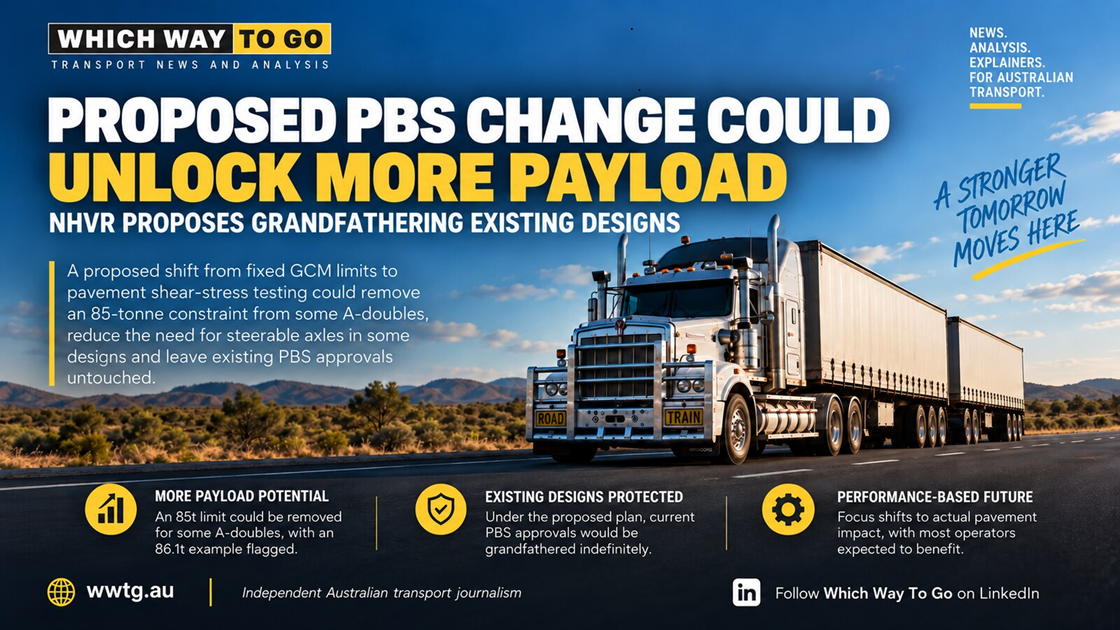
New PBS pavement rule could lift the 85-tonne A-double constraint — while existing approvals stay
NHVR’s proposed revised Pavement Horizontal Loading Standard could remove a current constraint for some future PBS designs while existing approvals continue under the proposed transition.
-
Let accreditation expire and the access benefit can stop with it
The transition from NHVAS to Heavy Vehicle Accreditation is not merely administrative. The NHVR says operators must stop using any HML, PBS, notice or permit arrangement that depends on accreditation if the required module expires.
-
NHVR says the Euro VI mass drafting problem is fixed — but the operational explanation is still missing
The NHVR says recent Heavy Vehicle National Law amendments have resolved a drafting issue affecting the Euro VI mass exception. It did not explain what was wrong, whether operators were affected or how the interim position was enforced.
-
One trailer or two? NHVR warns agricultural combinations to check the hauling unit
The new national agricultural notice allows one or two towed components depending on the hauling unit. Operators must identify the combination before travelling.
-
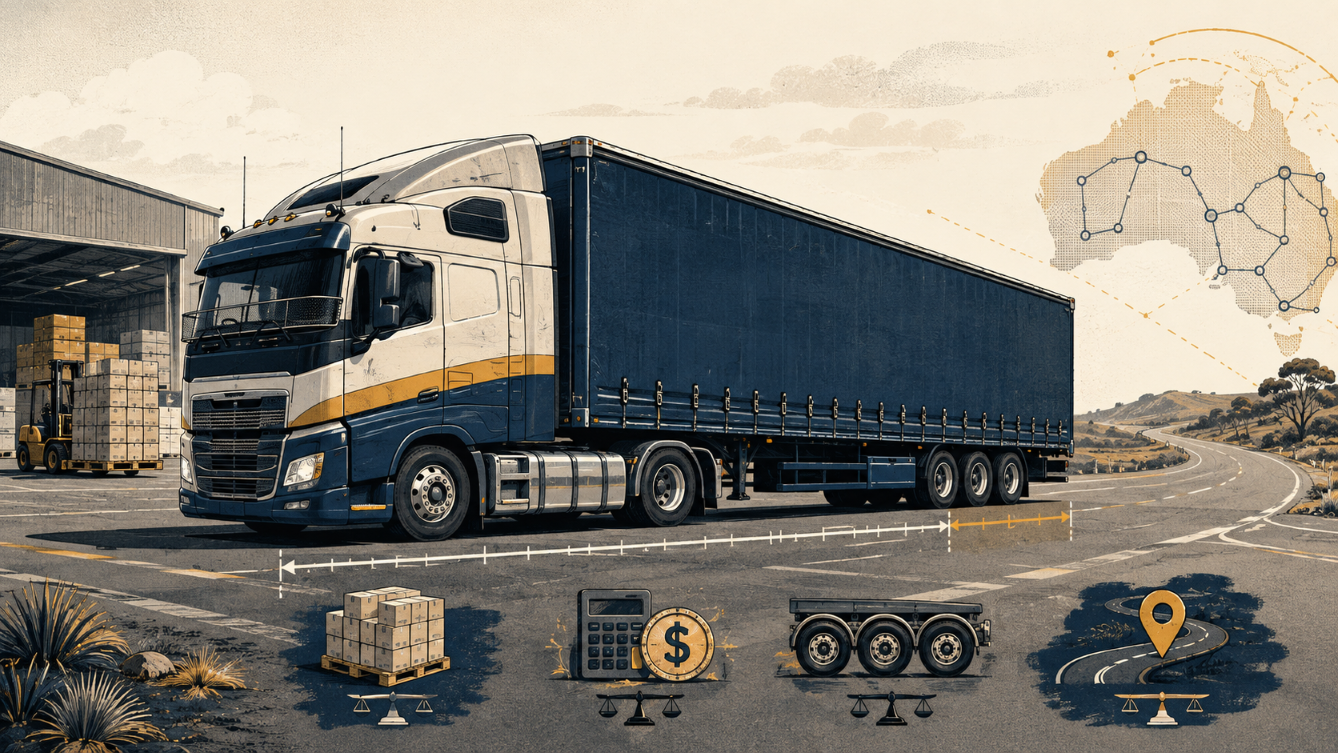
Will a 20-metre truck make you more money?
The extra metre and the shift from concessional to general mass limits can remove a costly compromise. But the winner between prescriptive 20 metres, higher mass and PBS depends on what the freight task is paying for.
-
What is an axle group and how do axle-spacing limits work?
An axle group is a legally defined set of closely spaced axles, and a heavy vehicle must comply with both the limit for each axle or group and the separate gross-mass limit produced by its axle spacings.
-
What do GVM, GCM, ATM and GTM mean?
GVM, GCM, ATM and GTM are maximum manufacturer or registration mass ratings for a vehicle, combination or trailer; they are ceilings, not the vehicle’s actual scale weight or an automatic legal loading entitlement.
-
What is load restraint and who is responsible?
A heavy-vehicle load must be placed and restrained so the vehicle remains stable and the load is unlikely to fall or move, with responsibility extending to every party whose transport activities influence the loading risk.
-
Which heavy vehicles can operate at 20 metres?
From 1 August 2026, eligible prime-mover/semitrailer and rigid-truck/trailer combinations can operate at up to 20.0 metres under general access only when every prescribed braking, trailer, dimension, mass and route condition is satisfied.