A fall in crude oil or wholesale diesel prices does not automatically deliver cheap fuel to Australia’s truck operators.
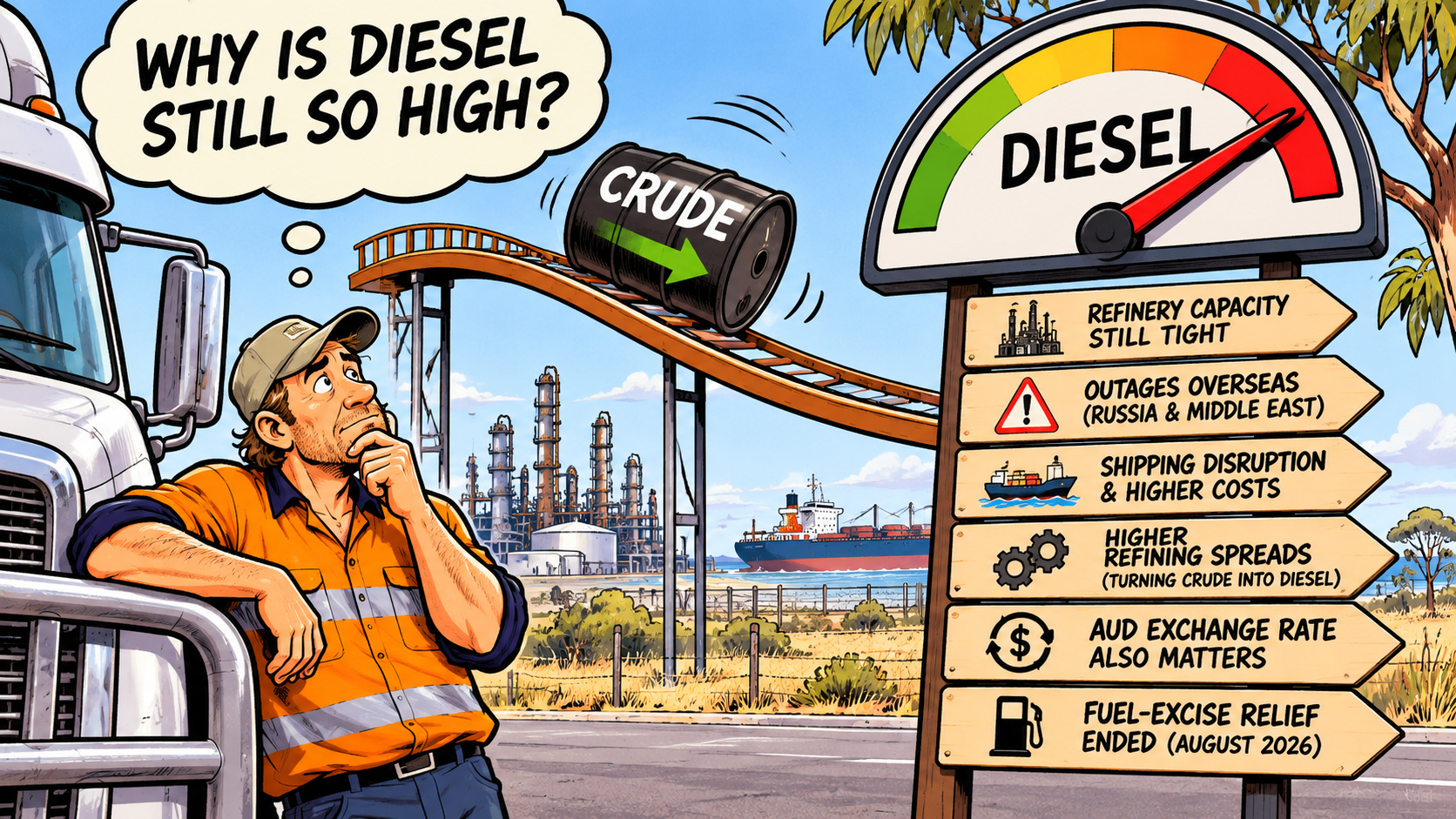
The ACCC says Australian diesel prices are linked most closely to the Singapore Gasoil 10 ppm benchmark, not crude oil alone. Exchange-rate movements also matter, while changes in international fuel prices can take about two weeks to reach Australian city pumps and longer in regional areas. ACCC fuel-price explanation.
The Reserve Bank’s November analysis says refinery outages in Russia and the Middle East, constrained diesel supply, shipping congestion and higher transport costs have kept the price of refined fuel elevated relative to crude. RBA November assessment.
Tax is another factor. The temporary federal fuel-excise reduction ended in August; the ATO lists diesel excise at 53.7 cents a litre from 3 August. Eligible businesses may claim applicable fuel tax credits, but those are not a discount displayed at the bowser. ATO excise rates; fuel tax credits.
For contractors, the question is not just what happens to diesel prices, but whether changes reach freight rates. Read WWTG’s separate fuel-cost recovery update.
Last checked: 19 November 2026. This explainer describes the published price drivers; pump prices vary by location and timing.