The short answer
A certified TMA provider has responsibilities for monitoring and resolving faults. The deadline depends on whether the failure is in the vehicle’s telematics device or the provider’s own system.
Austroads has clarified what certified telematics providers must do when equipment fails, giving operators a clearer starting point for assessing support arrangements before signing a contract.
In a written response to WWTG following our interview with Gavin Hill, Austroads’ General Manager, Strategic Engagement and Performance, the organisation pointed to the Telematics Monitoring Application specification and the certification agreement between Transport Certification Australia and each provider.
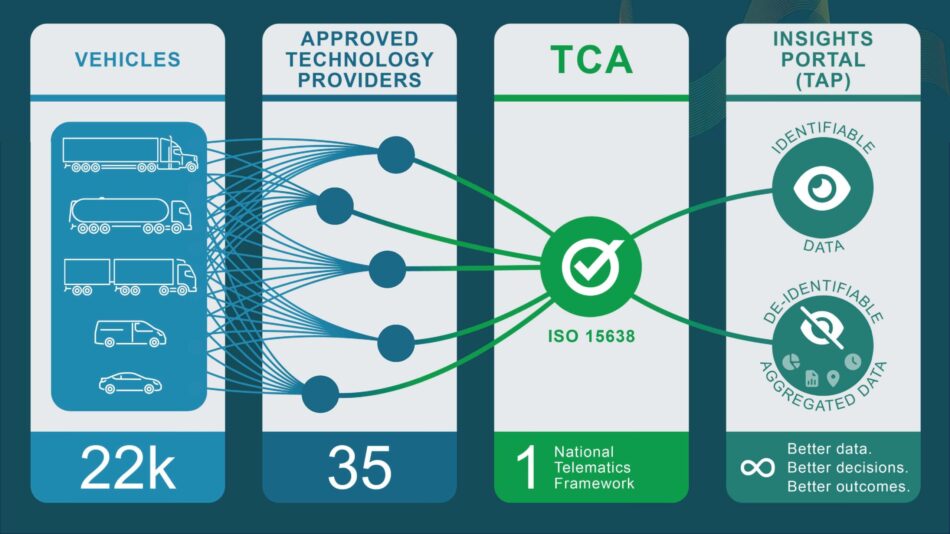
TMA is a monitoring application used within the National Telematics Framework. The certified application service provider — or ASP — is the business responsible for delivering that service.
A device fault starts an immediate response
The current specification requires the provider to begin working with the operator or device supplier as soon as it becomes aware of a telematics-device malfunction. TCA must be told immediately, including the estimated resolution period.
The provider must complete the resolution process within 15 working days of becoming aware of the fault, subject to reasonable cooperation from the operator. It must also arrange processing of records held by the device and tell TCA when the fault has been resolved.
Austroads says providers are responsible for monitoring the in-service health of devices and systems. Certification therefore involves ongoing responsibilities beyond fitting a unit to the truck.
What the three-day requirement covers
A separate requirement concerns the provider’s own system: the hardware and software it uses to collect, process, store and report TMA data.
The provider must have enough equipment and resources to return that system to operation within three working days if a component becomes inoperable. System malfunctions also require immediate action and reporting to TCA.
That is a different requirement from the 15-working-day device-resolution period. It should not be presented as a promise that every faulty unit fitted to a truck will be repaired within three days.
Certification and the service contract
For an operator, these requirements help identify who should coordinate a fault response. The commercial questions still need answers in writing: who takes the first call, who attends the vehicle, what labour or replacement costs are included, and how urgent support is handled.
The certification requirements do not themselves settle compensation for downtime or provide permission to keep operating under an access arrangement while its monitoring conditions are unmet. Operators need to check the applicable scheme conditions and contact their provider and the relevant authority about a fault.
Where Smart on-board mass equipment forms part of the arrangement, the supported pairing between the mass system and telematics provider also matters. Austroads directed WWTG to TCA’s current Smart OBM list.
Price the support alongside the subscription
Austroads also confirmed that the roughly $200-per-vehicle monthly TMA price point discussed in Hill’s interview remains indicative. Providers set their own prices; TCA does not set a retail tariff.
A quote needs to identify the required equipment, installation, subscription and support. A TMA price point alone is not a complete Smart OBM fitment price.
The practical question is what happens when the system stops working — and whether the operator’s contract provides the level of help the freight task needs.